

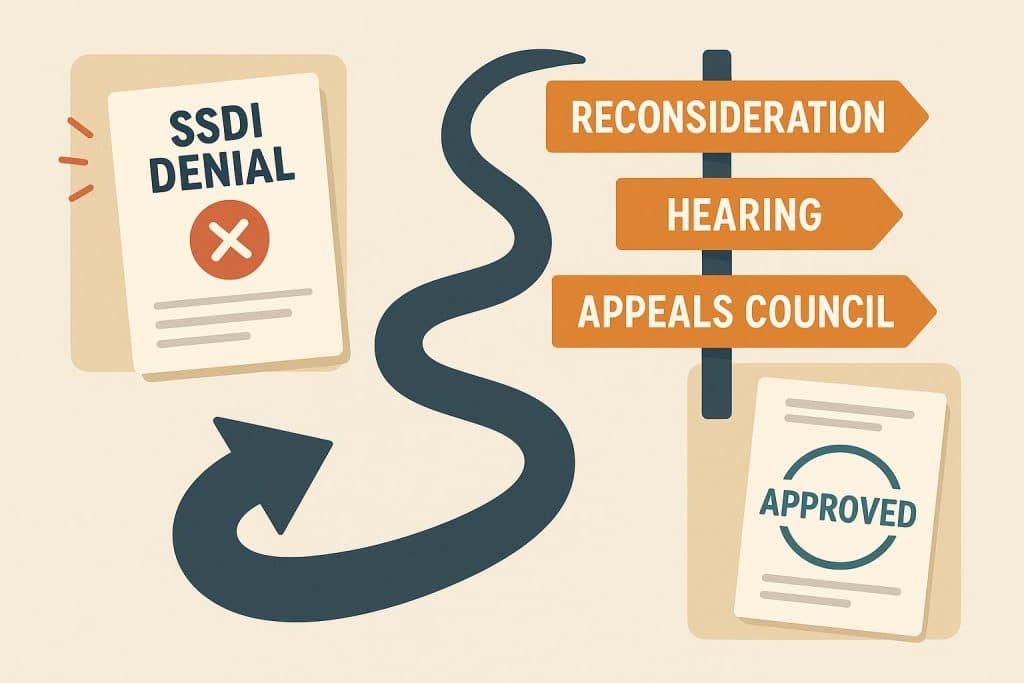
A denial letter from the Social Security Administration can feel like a dead end — but statistically, it’s closer to a starting point. According to FY 2024 data from the SSA, 62% of initial SSDI applications were denied. What that figure doesn’t tell you is that the SSDI appeal process is specifically designed to give denied applicants a way to challenge that decision, and a significant portion of those who go through it do eventually get approved.
Understanding how that process works — what each stage involves, what the timelines look like, and where decisions tend to turn — can make a real difference in how you approach it.
Why Initial Denials Happen So Frequently
To make sense of the appeals process, it’s worth stepping back to understand why so many claims don’t make it past the first review. The SSA applies a strict definition of disability — your condition must prevent you from performing any substantial gainful activity and must be expected to last at least 12 months or result in death. It’s a demanding standard, and a large share of denials have less to do with the condition itself and more to do with how the application was put together.
The most frequent reasons for denial fall into a few recognizable categories: medical records that don’t adequately support the claim, incomplete applications, insufficient detail about how the condition affects the ability to work, income above the substantial gainful activity limit, and insufficient work credits. Many of these are fixable — and the appeal process is, in part, built around giving applicants the opportunity to address them.
The Four Stages of the SSDI Appeal Process
The SSA’s appeal process proceeds through four distinct levels. Each has its own timeline, its own decision-maker, and its own approval rates. You don’t have to go through all four — many cases are resolved earlier — but understanding all of them helps you plan.
At every level, the deadline to file an appeal is 60 days from the date you receive the denial notice. The SSA assumes you receive the notice five days after it is mailed, so, in practical terms, you have 65 days from the date printed on the letter. Missing this deadline means losing the right to appeal at that level and, in most cases, having to restart the entire process with a new application, which can affect the back pay you’d be entitled to if eventually approved.
Stage 1: Reconsideration
Reconsideration is the first step after an initial denial. A different SSA examiner — someone not involved in the original decision — reviews the complete case file, including any new evidence you submit. This stage is a paper review; there is no in-person hearing.
Reconsideration has the lowest approval rate of any stage in the process. In 2024, only 16% of requests were approved. That said, it’s not optional — you have to go through reconsideration before you can request an ALJ hearing. The stage still serves a purpose: it’s an opportunity to get the full case record in order and submit any medical evidence that wasn’t included the first time around.
Reconsideration decisions typically take three to six months, though timelines can vary depending on caseloads and the complexity of your claim.
Stage 2: ALJ Hearing
If reconsideration is denied, the next step is requesting a hearing before an Administrative Law Judge (ALJ). This is widely considered the most important stage in the appeals process, and the statistics support that. In 2024, the approval rate at the ALJ hearing level was 51% — the first stage at which approvals outnumber denials.
Unlike reconsideration, this is an in-person (or video) hearing where you have the opportunity to present your case directly, bring witnesses, and respond to questions. The ALJ may also call a vocational expert to testify about what kinds of work, if any, you might still be able to perform given your limitations. This is where having clear, comprehensive medical records and a well-organized account of how your condition affects your ability to work matters most.
Getting an ALJ hearing on the calendar takes time — sometimes a lot of it. As of early 2025, over 271,000 cases were sitting in the national backlog. Depending on where you live, the wait between filing your request and actually sitting in that hearing room can range from a few months to well over a year. Things have improved somewhat in recent years, but the timeline is still hard to predict and leans heavily on how busy your local office is.
One thing worth knowing: approval rates can vary significantly by judge. Some ALJs approve the majority of cases before them; others deny more than half. This variation exists even within the same state or hearing office, and it’s one reason why the preparation and presentation of your case matters so much at this level.
Stage 3: Appeals Council Review
An unfavorable ALJ decision isn’t necessarily the end. The next option is requesting a review by the Social Security Appeals Council — though it works differently from the earlier stages. There’s no new hearing. The Appeals Council reviews the ALJ’s decision and evaluates whether the judge correctly applied SSA rules and whether the decision was reasonably supported by the existing record.
The Appeals Council can take several actions: it can deny the request for review (meaning the ALJ’s decision stands), issue its own decision, or remand the case back to an ALJ for a new hearing or additional review. Direct approvals at this stage are rare — the approval rate is approximately 1% — but a remand back to an ALJ hearing is a meaningful outcome for many applicants.
Reviews at the Appeals Council level typically take six months to over a year.
Stage 4: Federal District Court
The final level of appeal is filing a civil action in the Federal District Court. This step is available only after exhausting the SSA’s internal appeals process, meaning the Appeals Council has denied review or issued an unfavorable decision.
Federal court review is different in important ways from the earlier stages. The judge reviews the existing administrative record — no new medical evidence can be submitted at this level. The question is not whether you are disabled, but whether the SSA’s decision-making process complied with the law and was supported by the evidence already in the file. Common outcomes include the court upholding the SSA’s decision, remanding the case back to the SSA for further proceedings (which happens in a significant portion of cases), or — rarely — reversing the decision outright.
Federal court appeals are more complex and typically require legal representation. Cases at this level often take a year or more to resolve.
What Affects the Outcome at Each Stage
Several factors consistently influence how SSDI appeals are decided, regardless of which stage you’re at.
At every stage of the process, medical documentation is what the SSA is really looking at. The evaluation isn’t just about what condition you have — it’s about how that condition affects your ability to do work-related activities like sitting, standing, lifting, concentrating, and following instructions. Thorough, consistent records from treating physicians that speak directly to those limitations are far more useful than records that establish a diagnosis without explaining what it actually prevents you from doing.
How long your condition has lasted — and how long it’s expected to continue — is something the SSA examines at every stage. The threshold is 12 consecutive months, and your records need to demonstrate that. Periods where treatment wasn’t sought or documented can work against you, regardless of how severe the underlying condition actually is.
Having legal representation can make a meaningful difference — especially at the ALJ hearing stage. Research consistently shows that claimants with representation are approved at higher rates than those who go without. That’s because a knowledgeable representative understands what the SSA needs to see, how to challenge vocational expert testimony, and how to identify and address weaknesses in a case before the hearing.
Geography also plays a role. Although SSDI is a federal program, approval rates vary considerably by state, by hearing office, and even by individual ALJ. This doesn’t mean the system is fair or unfair in any given location — it means that outcomes are shaped by local factors, and understanding those factors is part of preparing a strong case.
Appealing Versus Reapplying
One decision that frequently arises after a denial is whether to appeal or simply start over with a new application. In most cases, appealing is the better option for one important reason: your original filing date.
If you appeal and are eventually approved, back pay is calculated from your original application date (subject to the five-month waiting period). If you reapply, that clock resets. For many applicants, that difference translates to months or years of benefits. The only situations where reapplying may make more sense are those involving purely technical denials where circumstances have genuinely changed — for example, if you previously didn’t have enough work credits and now do.
Keeping Track of Deadlines
The 60-day appeal deadline applies at every stage: reconsideration, ALJ hearing request, Appeals Council review request, and federal court filing. Missing any of these deadlines can mean losing the right to continue at that level. If you have a legitimate reason for missing a deadline — a medical emergency, for example — you can submit a written request for an extension, but this is not guaranteed to be granted.
The SSA lets you check your appeal status anytime through your My Social Security account online. Not sure what stage you’re in or what to do next? That’s completely normal. Reaching out to get SSDI help from someone familiar with the process can save you a lot of guesswork — and help make sure your case stays on track.
The Broader Picture
A denial at the initial stage, or even at reconsideration, doesn’t close the case. The data shows that the appeals process — particularly at the ALJ hearing level — is where a meaningful portion of ultimately successful claims are decided. What it requires is understanding the process, meeting the deadlines, and building the strongest possible evidentiary record at each stage.
That’s not always straightforward, especially when you’re also managing a serious health condition. But knowing how the system is structured — and why decisions go the way they do at each level — puts you in a much better position to navigate it.