


The best office chair should be an obvious necessity for anyone who works from a desk all day. But what, exactly, does “good” mean in this context?
The chair that you use should:
- Help avoid work related injury that comes from prolonged sitting.
- Be designed with the human body in mind.
Below, we’ll explore how an office chair with a footrest—along with other key features—contributes to a more efficient and responsive work environment.
The Importance of Ergonomics
Ergonomic office equipment has the distinction of having been made specifically for the human body.
This is not to imply that other office chairs are made for monkey feet. It’s more to say that when chairs are not designed with ergonomics as a first priority, they often fail to fully take into account the long-term effects of staying seated.
If you spend most of the day seated, you need a chair that offers adaptable lumbar support.
It’s not natural for humans to spend 40-plus hours a week seated. Our bodies become uncomfortable. Our circulation slows. And two things happen:
- Our muscles strain.
- Our bodies tense.
This discomfort is not always noticeable at first. It builds with time, developing in the form of neck pain, back discomfort, or even chronic fatigue. The most recommended office chair by experts will be optimized for eliminating those pain points.
How the Right Equipment Can Make a Difference
Inopportune office configuration causes the problem. What defines a truly suitable ergonomic chair? The key lies in whether it can provide consistent, science-based, and dynamic support for the body throughout long hours of use. The following three features are essential:
● Dynamic Spinal Support
An ideal backrest should offer targeted, segmented support for both the upper and lower back, while adapting to different sitting postures—whether leaning forward to work, reclining to relax, or shifting positions throughout the day. By continuously following the natural curve of the body, it provides stable support for the spine, helping maintain proper posture, relieve spinal pressure, and reduce the risk of back discomfort during prolonged sitting.
● Adaptive Arm Support
Multi-directional adjustable armrests allow the arms to remain in a naturally relaxed position, reducing tension in the shoulders and neck while minimizing fatigue caused by unsupported wrists and forearms. This adaptive support ensures comfort across various tasks—typing, reading, or multitasking—helping users stay focused and productive for longer periods.
● Breathable Pressure-Relief Backrest
A high-elasticity breathable mesh backrest promotes continuous airflow while automatically distributing pressure based on body contact. This reduces heat buildup and localized pressure points, enhancing all-day comfort and maintaining consistent support during extended use.
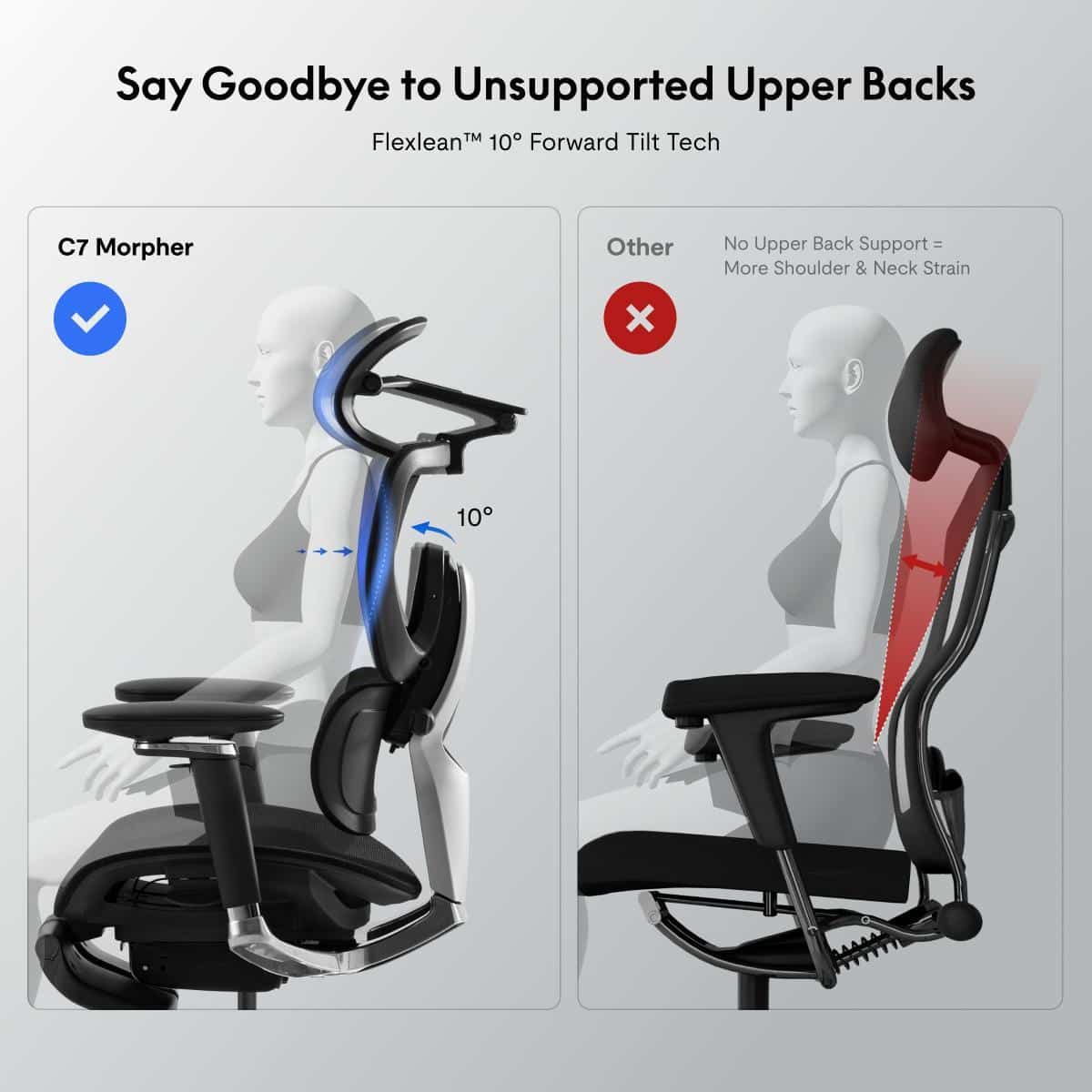
This office chair is truly optimized for support.
Paired with a complementary workstation, a big and tall office chair enhances overall workflow.
Of course, this isn’t about expecting everyone to work standing up. Most probably, a seated position will remain popular within the office, and the C7 Morpher chair ensures that employees are fully supported while seated.
Combined, this equipment helps employees work better.
Optimizing Work Conditions
Once you’ve developed an ideal physical space, it’s worth also considering a professional environment that is equally geared towards efficiency and wellness.
It’s good to optimize physical well-being through an ergonomic desk and chair combination. It’s also important to develop company policies that support productivity and retention equally.
- One of the biggest productivity wasters isn’t YouTube or Twitter, it’s burnout.
- When employees aren’t happy at work, they stop giving it their all.
- Eventually, they start looking for a new position.
The cycle continues. Look for ways to prioritize balance within your company culture. Offering ergonomic equipment is actually a great step in that direction. It shows a concern that extends beyond merely what the employee can do for you.
Equally important, though, are work-life balance considerations:
- Wellness initiatives that allow employees to prioritize health. This could include gym memberships, or company-wide fitness programs.
- Flexible scheduling to give employees as much freedom as possible.
- The integration of outdoor spaces into regular workflows to encourage activity, and feelings of peace.
Not only will these adjustments improve employee health, but they may also boost morale.
Conclusion
Great tools, software, and systems are certainly important for business. Equally important is the need to recognize that the people operating within these systems are human. Prioritize their needs through policy and their health through smart office configurations.
An ergonomic chair like the C7 Morpher is an excellent way to improve employee health and performance with a relatively modest input on your part.
