

Some things are just downright annoying, like being stuck next to the copy machine because they turned your office into a storeroom. Or listening to Lindsay harp on about her disaster date across the hall in the break room.
Your life is an episode of Severance without the creepy hallways and archaic production tools. Oh, wait, you have that and the stark white walls. No wonder every time you step into work, every day feels like Groundhog Day.
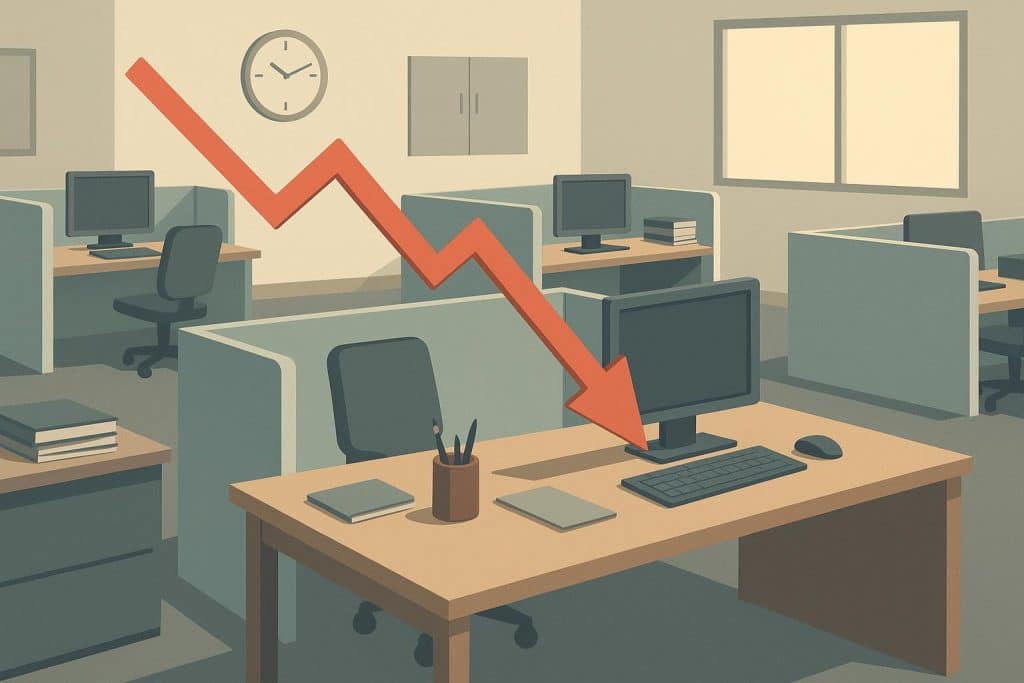
The problem isn’t you. It’s your office layout that is slowly killing your productivity and the will to survive. Cue the eerie Severance theme song.
When Open Plan Means ‘No Escape’
The 80s called. They want their open-plan layout back.
Open-plan offices were sold as the cure for corporate silos. More visibility. More collaboration. More spontaneous brilliance. What did we get instead? A front-row seat to everyone else’s business. (Yes, Lindsay, we’re talking to you)
Inc.com explains that open offices reduce productivity by increasing distractions and limiting meaningful interaction. Conversations become noise, and focus becomes a luxury.
For years, design professionals questioned whether open layouts worked or if they just looked good in pitch decks. We all know that when everything is visible, nothing gets done.
A Great Layout Means Nothing if it’s Poorly Set Up
Open-plan or not, the best office design can fall apart in execution.
Misaligned desks. Awkward spacing. Unstable furniture. It all adds friction to the workday. And friction, in productivity terms, is a polite word for “why is everything mildly irritating?”
Behind every functional workspace is a phase most people never see: commercial furniture installation. That’s the difference between a layout that works on paper and one that works in real life.
Office furniture installation services pay attention to detail, coordination, and commitment to delivering well-executed workplace installations.
If you’ve ever walked into an office where everything flows, chances are it was installed with precision and intention. Delivery, assembly, and proper setup are the sweet spot, says FourSpoke.
The 750mm Problem
There’s a lesser-known issue floating around workplace design circles, which some call the “750mm fallacy.”
It’s the idea that minimal desk space is enough. Enough for what, exactly? Typing like a T. rex? Workers squeezed into tight layouts deal with reduced comfort, limited movement, and low-grade annoyances that chip away at productivity.
One recent Reddit discussion called the design model out and warned that spatial compromises can make simple tasks unnecessarily frustrating.
It turns out, humans don’t do their best work when they feel like carry-on luggage.
Drab Spaces, Dull Output
A dull office is uninspiring and actively working against you.
Entrepreneur.com reports that environments lacking color, natural light, and thoughtful design can lower both mood and productivity. And it’s not just aesthetics. A poorly designed workspace can affect motivation, creativity, and how long employees can stay focused.
Then again, nothing says “innovate!” quite like flickering fluorescent lights and a wall the color of expired yogurt.
While we’re on the topic of drab spaces, it’s an appropriate time to introduce cubicles to the group chat, those fabric-walled boxes designed to offer “privacy.”
Turns out, they’re not much better. Cubicle office setups can limit collaboration, reduce engagement, and create a sense of isolation that drains enthusiasm.
So if open offices are chaotic and cubicles are suffocating, what’s the answer? (We’ll get there.)
Too Much Noise, Not Enough Focus
Between Slack notifications, phone calls, and Steve from accounting narrating his lunch plans, modern offices are rarely quiet.
Distractions have become a major productivity killer, constantly pulling attention away from meaningful work.
The result? Shallow focus. Fragmented thinking. And a workday that feels busy but produces very little.
That’s not multitasking. That’s cognitive ping-pong.
So, What Works?
The most effective offices don’t commit to one rigid layout. Instead, they blend different zones:
- Quiet areas for focused work
- Open spaces for collaboration
- Comfortable spots for informal meetings
It’s less about choosing a trend and more about designing for how people work. As experts continue to debate the best approach, there’s one thing they can agree on. Productivity is creating an environment that supports different needs throughout the day.
Break Up With Your Current Layout
If your team is struggling to focus, collaborate, or stay motivated, it might not be a people problem. It might be the space itself.
No amount of coffee, willpower, or corporate pep talks can fix a layout that’s fundamentally working against you. Call in the professionals. Call in office setup services. Consult them on workplace furniture installation.
Fix the space, and you might just fix the work.