

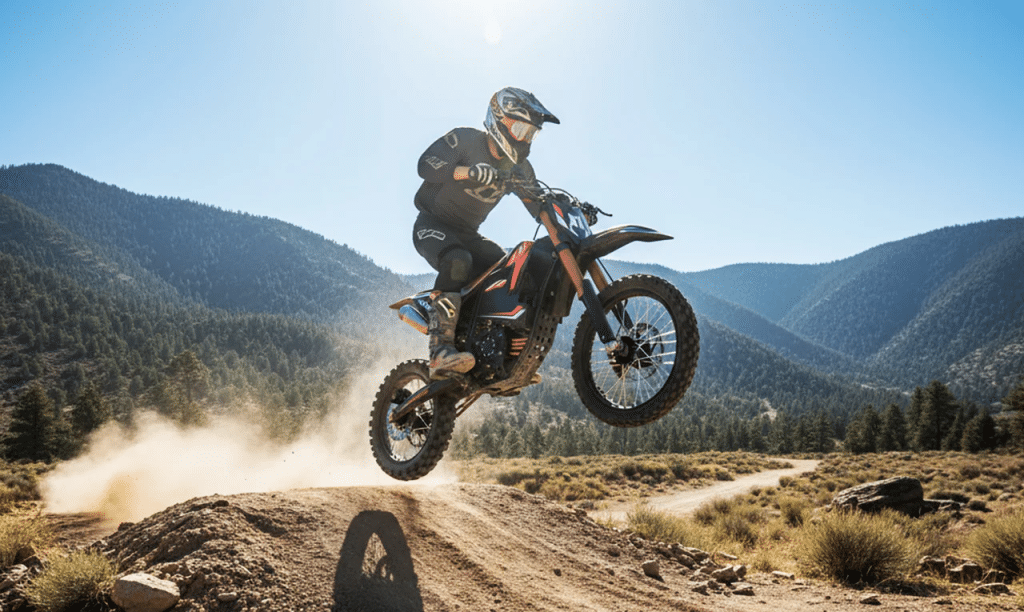
For many people who become interested in off-road riding, the same question often comes up: What if I’ve only ridden a bicycle? Dirt Bikes can appear intimidating at first. They are larger, faster, and powered by motors instead of pedals. Because of that, many people assume they need previous motorcycle experience before trying one.
In reality, that assumption is not always accurate. While riding an Electric Dirt Bike does involve learning new controls and adapting to a motorized machine, many riders with bicycle experience discover that the transition feels more natural than expected. Understanding what skills carry over and what feels different can help beginners approach their first ride with more confidence.
Many Bicycle Riders Can Learn to Ride an Electric Dirt Bike
A large number of Electric Dirt Bike riders started with nothing more than bicycle experience. Riding a motorized off-road bike certainly introduces new elements, but the core idea of controlling a two-wheeled vehicle remains the same. Balance, steering control, and awareness of terrain are all abilities that bicycle riders already develop over time.
Because these fundamentals are shared, learning to ride an Electric Dirt Bike often feels less like starting from scratch and more like expanding on familiar skills. Riders who already know how to stabilize a bike at low speed or adjust their posture when riding over uneven surfaces often find that those instincts remain useful.
That does not mean there is no adjustment period. Electric Dirt Bikes are heavier than bicycles and can accelerate much faster. Riders need time to become comfortable with the added weight and power. However, many beginners discover that the learning process progresses steadily once they begin practicing.
Bicycle Skills That Carry Over to an Electric Dirt Bike
Several important riding skills transfer directly from bicycles to Electric Dirt Bikes. The most obvious is balance. Anyone who has spent time riding a bicycle already understands how subtle body movements influence stability and direction.
Steering awareness is another skill that translates well. Bicycle riders learn to look ahead and anticipate terrain changes rather than reacting at the last moment. This habit becomes even more important in off-road environments where surfaces can shift quickly.
Braking awareness also carries over. While the braking systems on Electric Dirt Bikes are stronger and designed for higher speeds, the general concept of controlling speed gradually and maintaining traction is familiar to bicycle riders.
Another helpful advantage is overall riding rhythm. Cyclists develop an intuitive understanding of how movement, speed, and terrain interact. When transitioning to an Electric Dirt Bike, this sense of rhythm often helps riders adapt to new controls more smoothly.
What Feels Different When You Ride an Electric Dirt Bike
Although many bicycle skills remain useful, riding an Electric Dirt Bike still introduces several new sensations. The first difference riders usually notice is weight. Electric Dirt Bikes are significantly heavier than bicycles, which affects how the bike responds when turning, accelerating, or stopping.
The presence of a motor also changes the riding experience. Instead of pedaling to generate speed, riders control acceleration using a throttle. This can feel unusual at first, especially for someone accustomed to controlling speed with their legs.
Braking systems can feel different as well. Electric Dirt Bikes are designed for off-road performance, so their brakes tend to be stronger and more responsive. Riders may need a few practice sessions to learn how much pressure to apply and how the bike reacts during quick stops.
Despite these differences, many riders find that the adjustment period is relatively short. Once riders become comfortable with throttle control and the additional weight, the overall riding experience begins to feel intuitive.
Why Many Beginners Start With Electric Dirt Bikes
Electric Dirt Bikes have become a common entry point for beginners partly because they simplify some aspects of riding. Traditional gas Dirt Bikes often require riders to manage multiple mechanical elements such as clutch control and gear shifting. For someone without motorcycle experience, these extra steps can feel complicated.
Electric models remove much of that complexity. Without a clutch or gear shifting, riders can focus on core riding skills such as balance, steering, and throttle control. This simpler operation allows beginners to learn the basics of off-road riding without feeling overwhelmed by mechanical coordination.
Electric motors also deliver power in a smooth and predictable way. Instead of sudden bursts of acceleration, the power tends to build gradually, which can help beginners maintain control while they learn.
Because of these factors, many people exploring off-road riding view Electric Dirt Bikes as an approachable starting point. Riders researching the category sometimes encounter newer electric models from brands such as Qronge that emphasize user-friendly designs and stable power delivery for developing riders.
How Bicycle Riders Usually Learn to Ride
The learning process for someone transitioning from a bicycle usually develops gradually. Many riders begin by practicing in open spaces where they can get comfortable with the bike without obstacles or distractions.
During the first sessions, riders focus on simple actions such as smooth acceleration, controlled braking, and steady turning. Once these basic skills feel natural, they can begin exploring light trails or uneven ground where balance and terrain awareness become more important.
Because bicycle riders already understand two-wheel balance, they often progress faster than complete beginners. Instead of learning how to stay upright, the focus shifts toward learning how to manage motor power and navigate rough terrain.
As confidence builds, riders begin to develop their own riding rhythm. What initially feels unfamiliar gradually becomes routine, allowing riders to enjoy the experience rather than concentrating on every control.
Conclusion
For riders who have only ridden a bicycle, moving to an Electric Dirt Bike is often more manageable than it first appears. Many of the essential skills such as balance, steering awareness, and terrain reading already exist.
The main adjustments involve learning to control motor power and adapting to a heavier bike. With steady practice, these changes usually become comfortable. For many people interested in off-road riding, bicycle experience can be a practical starting point.