

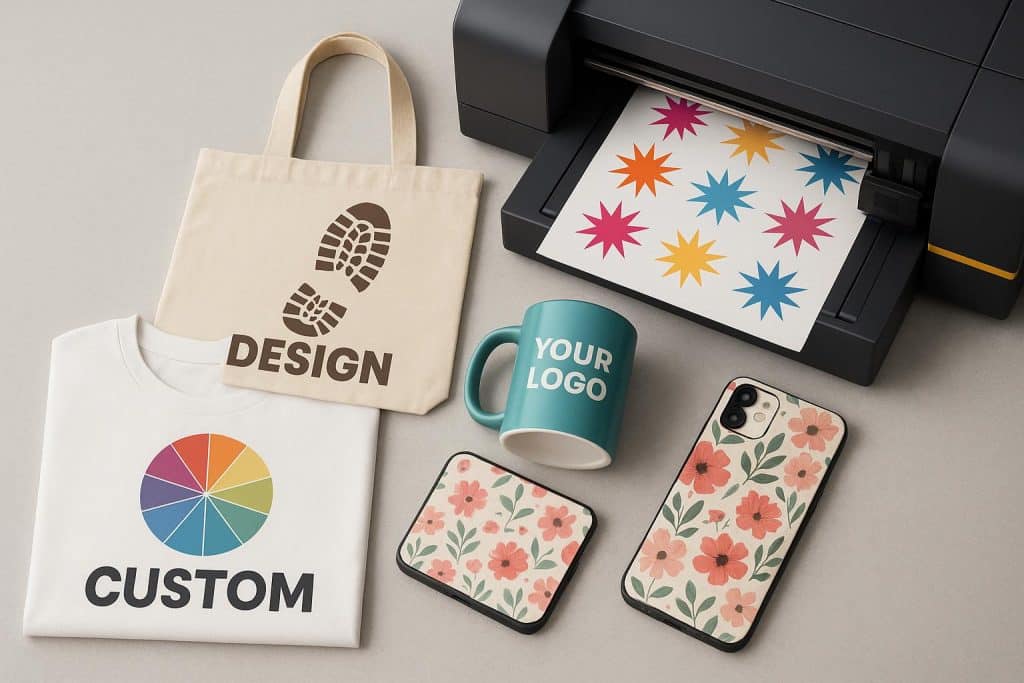
For a long time, custom printing was treated as a niche operational function. A business needed labels, packaging, apparel decoration, promotional merchandise, or branded samples, and printing was simply one more step in the supply chain. That view is changing quickly. Today, printing technology is becoming a growth lever for product businesses that want shorter turnaround times, faster testing, and more control over how their brand appears in the market.
What changed is not only consumer demand for personalization. Manufacturers, print shops, e-commerce brands, and industrial suppliers now need production systems that can handle variety without slowing the business down. Short runs are common. Product testing cycles are shorter. Buyers expect new designs and packaging updates at a pace that older workflows were not built to support.
That is why the conversation around digital printing has become more strategic. Companies are no longer asking only whether a machine can print. They are asking whether it can help them reduce waste, improve speed to market, and support multiple product applications without forcing the team into slow and expensive setup cycles.
One of the biggest examples of this shift can be seen in fabric and apparel production. Businesses that decorate garments, soft signage, or promotional textiles now need print systems that are flexible enough to support smaller runs while still keeping output quality and color consistency under control. In that context, a modern direct to fabric printer can play a very different role than the production equipment of the past. It is not just a machine on the floor. It can become part of a faster, more responsive operating model for businesses that need to adapt quickly to customer demand.
This matters because the economics of customization have changed. In the past, a company might wait until there was enough volume to justify setup time, screens, or outsourced production. Now the question is often the opposite: how can the business profit from smaller batches, shorter lead times, and more experimentation? Digital systems make that possible by lowering the friction between a design concept and a saleable product.
The impact goes beyond print shops. Consumer brands are using digital printing to validate demand before scaling a design. Corporate merch suppliers are using it to deliver more targeted campaigns. Home decor producers are using it for seasonal and regional variation. Textile businesses are using it to reduce inventory risk by producing closer to actual demand. In each case, the printing workflow becomes part of a smarter inventory and fulfillment strategy.
There is also a branding angle that should not be overlooked. Product businesses compete heavily on presentation, and presentation now changes faster than ever. A packaging refresh, a special campaign, or a custom substrate application may need to move from idea to execution in days, not months. In-house or closely managed digital print capability gives businesses more control over those moments.
Another reason this category is gaining attention is that buyers are becoming more sophisticated about equipment selection. They want to understand supported materials, real output scenarios, maintenance requirements, workflow compatibility, and whether a system fits their actual product mix. A business focused on textiles may need a very different solution from one focused on rigid substrates or promotional goods.
That is where research and comparison become especially important. For example, companies exploring broader digital decoration opportunities are increasingly evaluating whether a UV printer fits their product portfolio for signage, packaging samples, rigid materials, and specialty branding applications. The right decision is rarely about chasing the most features on paper. It is about matching the machine to the business model, the target margins, and the day-to-day workflow realities.
From an operations standpoint, the most successful printing investments usually share a few traits. First, they support multiple revenue opportunities rather than a single narrow use case. Second, they reduce handoff delays between design, approval, and production. Third, they help the business say yes to more customer requests without creating chaos in scheduling or excessive material waste. And fourth, they offer enough consistency that teams can scale output without constantly troubleshooting quality.
There is also a wider market reason why this matters now. The competition in product categories such as apparel, merchandise, gifting, packaging, and specialty branding has intensified. When more businesses are offering similar products, the ability to customize quickly and produce professionally becomes a differentiator. Custom printing is no longer just a back-end capability. It is part of how brands position themselves in crowded markets.
This is especially true for small and mid-sized businesses that want enterprise-level flexibility without enterprise-level complexity. Many are not looking for the largest machine in the market. They are looking for the right machine for the jobs they can win now and the categories they want to expand into next.
The companies that gain the most from digital printing tend to think beyond the first order. They look at repeatability, expansion into adjacent products, control over turnaround time, and the long-term value of owning more of the production process. They are not just buying equipment. They are building a capability.
That is the real story behind the rise of custom printing today. It is not only about decoration. It is about speed, adaptability, and operational control. As more businesses look for practical ways to improve margins and respond faster to market demand, print technology is moving from the sidelines into a more central role in growth strategy.
For businesses evaluating where that next advantage might come from, printing deserves to be viewed less as a commodity service and more as an infrastructure decision. The teams that understand that shift early will be in a better position to turn customization into a repeatable competitive edge.