

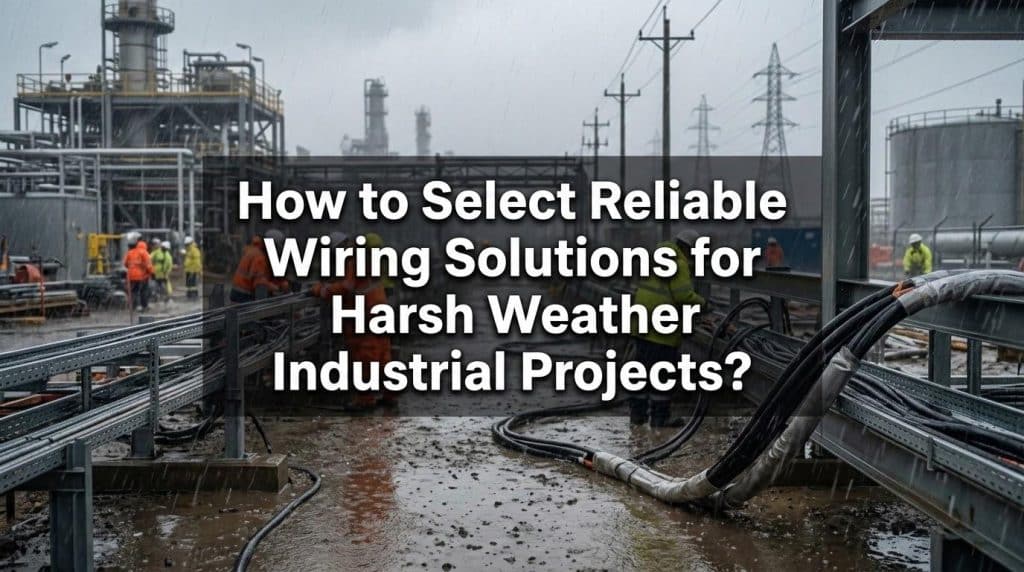
When a critical system goes down in the middle of a blizzard, nobody cares how much money procurement saved on the initial parts order. The only thing that matters is getting the facility back online quickly. Industrial wiring operating outdoors is not a place for compromises.
If you are building out infrastructure that lives outside, you have to engineer for the worst possible day. Weather does not respect spec sheets. Water, salt, and severe temperature swings will find the weakest point in your system and exploit it. Selecting the right components takes more than just checking a box on a purchase order. It requires understanding exactly how materials behave when things get rough.
Defining the Actual Threat Profile
Before looking at supplier catalogs, you need to lock down exactly what the electrical setup will face. Dealing with rain is the easy part. A standard outdoor rating handles basic rainfall just fine. The real problems start when you combine moisture with other environmental stressors.
Think about agricultural operations. You have:
- UV rays baking the infrastructure in July
- Freezing ice accumulation in January
- Constant exposure to fertilizers and ammonia throughout the year
You need a setup built specifically for that exact chemical and thermal profile. Sourcing a standard Waterproof Cable Harness is a good starting point for keeping out the rain, but if the outer jacket degrades from UV exposure in six months, the internal waterproofing will not save the system. You have to match the polymer to the actual threats on the ground. As heat requires different material properties than cold.
Why Manufacturing Tolerances Keep Water Out
A lot of people assume weatherproofing is just about using thick rubber and heavy plastics. It actually comes down to how tight the physical connections are where the wire meets the housing. When equipment heats up during operation and cools down at night, the materials expand and contract. Over hundreds of thermal cycles, poor connections develop microscopic gaps. Once a gap opens, capillary action pulls moisture straight into the electronics.
This is exactly where a High precision cable assembly pays for itself. If the pins, potting, and overmolding are manufactured to tight tolerances, the thermal cycling will not create those ingress points. The seal stays completely intact regardless of the weather outside or the heat generated by the machinery. Quality manufacturing eliminates the micro-gaps before they ever have a chance to form.
Jacketing Materials for Severe Environments
Look closely at the materials actually protecting the copper. PVC is cheap and widely available but it gets brittle in sub-zero temperatures. If a technician accidentally bumps a frozen PVC jacket with a tool, it cracks. Once it cracks, moisture gets in and the clock starts ticking toward a failure.
For serious colds or areas with heavy mechanical abuse, polyurethane or thermoplastic elastomers make significantly more sense. They stay flexible when the temperature drops.
If your project sits on a coastline or an offshore platform, you are dealing with constant salt fog. Salt eats standard connectors alive. In those cases, you need:
- Marine grade jacketing * Heavily plated connectors to prevent corrosion from destroying the signal path
You also need to account for localized chemicals like hydraulic fluid or diesel fuel, which will melt certain rubbers entirely.
Validating Ingress Protection Ratings
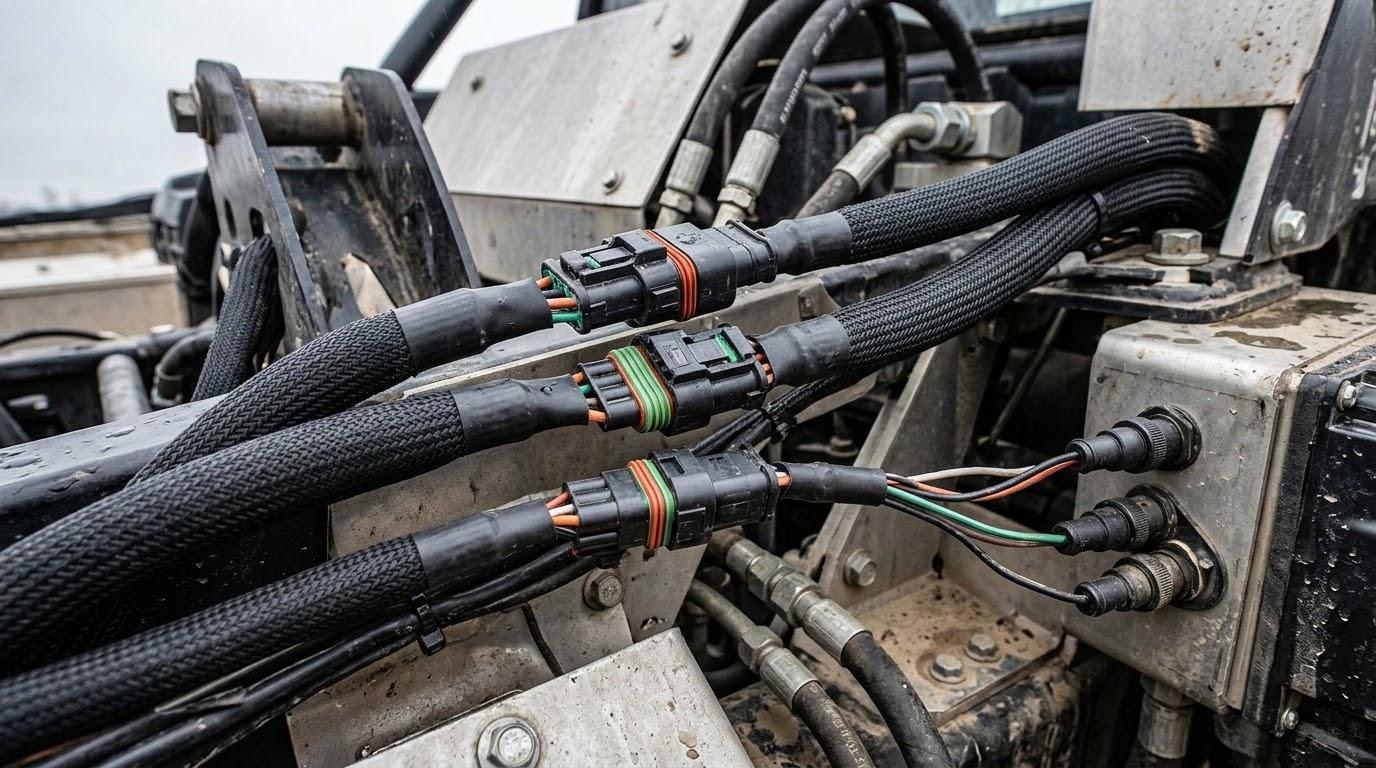
IP ratings tell a useful story but you have to read the whole thing.
- IP67 means the part survives temporary submersion.
- IP68 means it handles continuous submersion.
Those tests happen in controlled laboratories with static water. Real life involves pressurized spray, driving rain, and wind-blown debris. If your site gets hit by severe storm winds pushing rain against the equipment, an IP67 seal might fail even if it is not technically underwater. You have to look at how Waterproof wire Harnesses perform under dynamic pressure, not just sitting in static pools of water. Ask your vendor for test data that matches your specific operational reality. Lab results are great, but field data is what keeps your operation running.
Routing and Physical Installation Practices
Even the best wiring will fail if installed poorly. You can buy top tier equipment and ruin it on day one with bad routing. Water follows gravity. If you route cables so they funnel water straight into a connector, eventually the seal will give out under the constant pressure.
Key Installation Rules:
- Always incorporate drip loops: Make sure the lowest point of the line is below the connector so water drips off onto the ground naturally.
- Watch your bend radiuses carefully: Bending a stiff cord too sharply stresses the internal strands and can physically pull the jacketing away from the connector housing. That creates a direct path for moisture to enter the system.
- Watch out for tight zip ties: Over time, vibration will cause a tight nylon tie to slice right through a weatherproof jacket. Give the cables room to move and flex.
The Cost of Field Maintenance
When things fail, they rarely fail on a sunny Tuesday afternoon. Splicing and repotting connections in the field under terrible weather conditions is difficult, dangerous, and expensive. I’ve watched crews try to strip tiny wires while wearing heavy winter gloves, and it is a frustrating process that rarely results in a reliable fix.
Modular designs solve this problem. If a section goes bad, your technicians should be able to unthread a connector, pull the damaged section out, and plug a new one in quickly. You want to minimize the amount of open air electrical work happening during bad weather. Spending more upfront on modular, sealed connections drastically cuts down the hours your crew spends fighting the elements during an outage.
Establishing Vendor Reliability
Do not trust marketing brochures at face value. Ask vendors hard questions about their testing protocols. You want to know if they run their own thermal shock testing. Find out if they do batch testing or if they inspect every unit before shipping. In demanding industries, you need to know every single piece of hardware off the line meets the spec.
Ask about their supply chain consistency. If they swap resin suppliers halfway through your project to save a few cents, that can change the durability of your components without you knowing. Keep your suppliers accountable to the engineering realities of your site. If they cannot answer specific questions about cold weather flexibility or chemical resistance, find a supplier who can.