

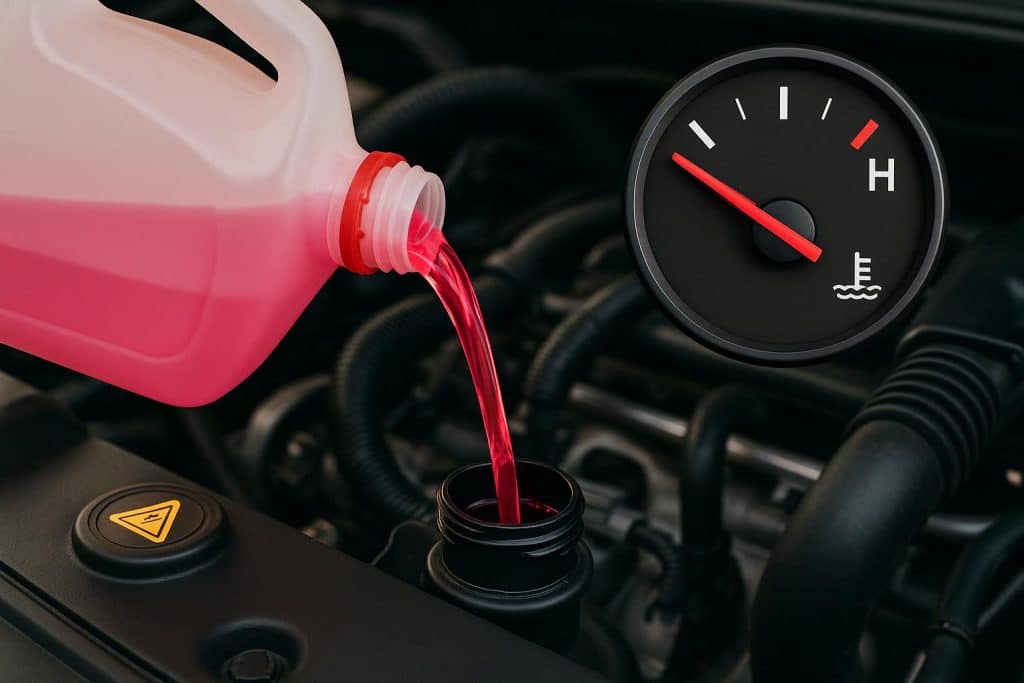
Your engine produces a huge amount of heat when you’re driving. Without proper control, that temperature would literally burn away the engine in minutes. The cooling system and the coolant inside are what protect your engine.
However, most drivers do not know much about coolant. They underestimate how important it is to car maintenance. Below, we will discuss more about the cooling system and problems to watch out for.
The role of coolant
Coolant is a fluid that flows around the engine. It absorbs heat and takes it to the radiator, where it is released into the air. It then goes back to the engine and repeats the process over and over. As long as the car operates.
Without this constant circulation, the engine temperature would rise so rapidly that:
- It warps metal
- Cracks cylinder heads
- Damages moving components beyond repair.
Coolant also keeps the liquid in the system from freezing during cold weather. That is why it is also known as antifreeze. This helps to:
- Prevent the liquid in the system from freezing in cold temperatures
- Protect metal components from internal corrosion
- Lubricate the water pump that keeps the entire system moving.
It is among the most labor-intensive liquids within any car. This is why you must maintain it correctly.
Why it requires regular replacement
A common misconception is that coolant lasts indefinitely. It doesn’t.
Coolant contains chemical additives used to:
- Resist corrosion
- Keep the coolant from freezing or boiling away.
These chemicals become ineffective over time. Old, compromised coolant can in fact get acidic. Consequently, it starts corroding the parts it is meant to protect, such as:
- The radiator
- Water pump
- Engine block.
Most manufacturers recommend a coolant change every two to five years, depending on:
- The type of cooling liquid
- The vehicle’s running time.
Don’t know when you last changed your coolant? Don’t even know what type it needs to be? This is the type of question you want to ask at your next Auto Service Virginia Beach VA. A good car mechanic will inspect the coolant and warn of any issues.
How to check your coolant level at home
This is one of the most basic things you can do between services.
Locate the coolant reservoir. This is a translucent plastic tank usually situated near the radiator. It has minimum and maximum markings on the side. When the engine is cold, the fluid level will be between those two markers. If it is always low, there could be a leak somewhere in the system. That needs professional repair.
Never open the radiator cap on a running or hot engine. The cooling system is pressurized. Therefore, opening it when the engine is hot can release scalding hot fluid at high pressure. Wait until the engine cools down. Then, you can check any cooling system components.
Understanding your temperature gauge
All cars have a temperature gauge on the dashboard. But far fewer drivers pay attention to it. After the engine has warmed up, the needle should rest in the middle of the gauge. That is usually after the first five to 10 minutes of driving.
There is a problem if:
- The needle moves towards the red zone
- The temperature warning light comes on.
This means that the engine is overheating. You must take immediate action. Stop safely at an appropriate place and turn off the engine. Running an overheated car for any reason can lead to serious and permanent engine damage. Even for short distances. Worse, it can cost thousands to repair.
You might encounter other abnormalities like:
- The temperature is lower than normal
- The temperature does not increase further.
This can be a sign that the thermostat may be stuck open and not allowing the engine to get to the proper operating temperature. It is not as serious. But it is still a problem that should be fixed.
What causes an engine to overheat
If a car overheats, it is usually for a specific reason. Knowing some of the most common reasons can help you stay on top of the issue.
- A leak. It results in a low coolant level.
- A failed water pump. It doesn’t pump coolant efficiently.
- A damaged radiator. It cannot disperse heat properly
- A bad thermostat. It sticks closed and traps heat in the engine
- A blown head gasket. It allows combustion gases to enter the cooling system.
All these are serious causes that require immediate professional diagnosis at the London Bridge Auto and Transmission Repair Shop Virginia Beach. A head gasket failure in particular is one of the most expensive cooling system repairs you can face. Therefore, catching the early signs of overheating before it reaches that point is critically important.
A key takeaway
Your cooling system ensures your engine runs safely and effectively. So:
- Regularly check coolant levels
- Watch your temperature gauge
- Deal with any temperature-related issues immediately.