

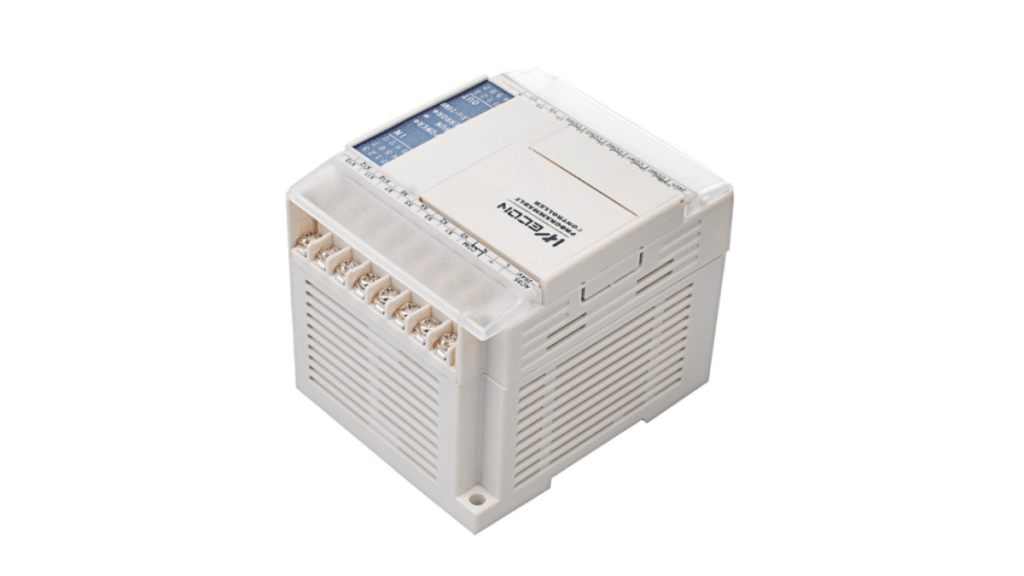
Industrial automation control has been a rapidly developing field in recent years, and PLC (Programmable Logic Controller), as a critical component in industrial control, is widely used in various industries for automated production processes. With its programmability, reliability, and flexibility, PLC plays a pivotal role in industrial automation control. Below, we will discuss the application of PLC in industrial automation control from the perspective of different industries.
Application of PLC in Manufacturing
PLC is extensively applied in manufacturing. In traditional mechanical manufacturing, PLC can control the operational states of machinery, such as starting, stopping, fast forward, and fast reverse of machine tools. Additionally, PLC can work in conjunction with other automated equipment, enabling the operation of automated production lines. For example, in the automotive manufacturing industry, PLC can control the operation of car production lines, realizing automated assembly and inspection processes. In the pharmaceutical industry, PLC can manage the operation of drug production lines, ensuring the stability and reliability of the production process. Thus, we can understand that the application of PLC in manufacturing provides a solid foundation for the automation of production processes.
Application of PLC in the Energy Industry
PLC also plays a crucial role in the energy sector. In power plants, PLC can control the operational status of generator units, achieving automation in the power generation process. Moreover, PLC can monitor and control the power grid and distribution systems, ensuring the stability of power supply. In energy management, PLC can record and analyze energy usage, assisting companies in formulating reasonable energy consumption plans and improving energy utilization efficiency. From this, we can conclude that the application of PLC in the energy industry provides essential support for energy production and management.
Application of PLC in the Automotive Industry
PLC is widely used in the automotive industry as well. During the car manufacturing process, PLC can control and monitor the entire production line, improving production efficiency and product quality. Furthermore, PLC can control automotive power systems and control systems, ensuring the safety and stability of vehicles. In addition, PLC can be applied to the field of automated driving, controlling actions such as acceleration, braking, and steering to enhance driving safety and comfort. Therefore, it can be said that the application of PLC in the automotive industry provides critical technical support for both vehicle manufacturing and driving.
Logic Control and Motion Control
PLC uses logical operations like “AND,” “OR,” and “NOT” to achieve logic control, timing control, and sequential logic control. It can be employed to control individual devices or entire automated production lines. Simultaneously, PLC utilizes dedicated motion control modules and specialized commands to control position, speed, and acceleration in linear or circular motion, enabling single-axis, dual-axis, and multi-axis position control. This integrates motion control with sequential control functions, as seen in applications such as assembly machinery, robots, and metal-cutting machine tools.
Conclusion
The application of PLC in industrial automation control is vast, spanning industries from manufacturing to energy, automotive, and construction. Its flexibility and programmability allow it to adapt to various industrial environments and control requirements. With the continuous advancement of technology, PLC’s role in industrial automation control will continue to expand, bringing more convenience and benefits to our production and daily lives.