

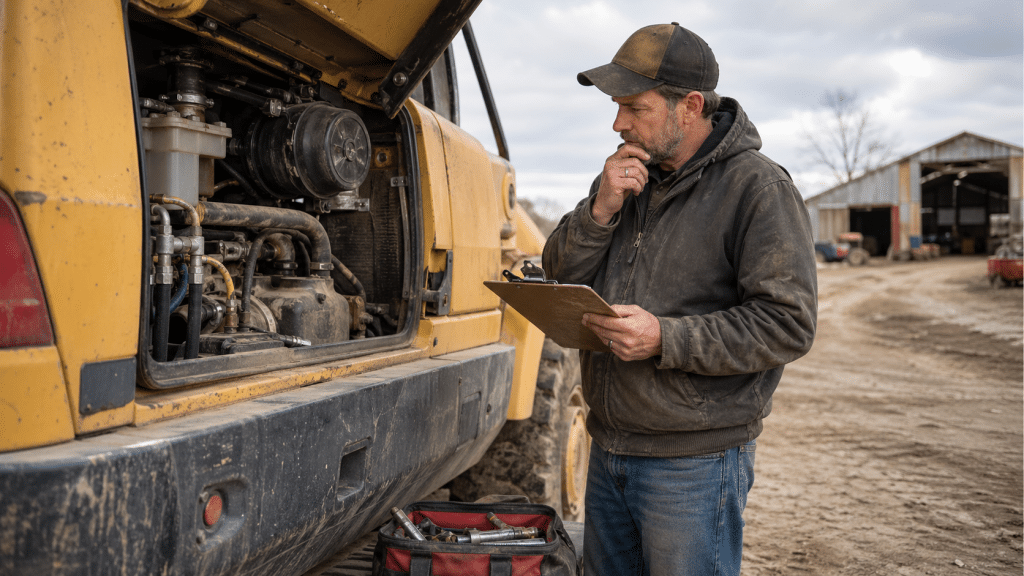
Every equipment owner eventually faces a version of the same uncomfortable question: Is this machine still worth fixing?
It usually does not start with one dramatic failure. More often, the signs build slowly. The engine smokes a little more than it used to. It takes longer to start on cold mornings. Power drops when the machine is under load. Oil consumption creeps up. Coolant needs topping off more often. A knocking sound appears, disappears, then comes back.
At first, each issue may look manageable on its own. But over time, those small concerns begin to point toward a larger decision.
For contractors, farmers, fleet managers, and small business owners, that decision is not only mechanical. It affects cash flow, schedules, customer promises, and sometimes the future of a machine that has been part of the business for years. Replacing equipment is expensive, but major engine work is not a small choice either.
So the real question becomes: how do you decide when an engine deserves another chance?
Major Engine Repairs Are Business Decisions, Not Just Mechanical Ones
When an engine problem becomes serious, the repair estimate is only one piece of the picture.
A machine that is down cannot earn its keep. A contractor may have to delay work or rent another unit. A farmer may lose valuable time during a short seasonal window. A repair shop may have customers waiting while parts are confirmed. Even when the mechanical diagnosis is clear, the business decision can still be complicated.
That is why major engine repairs should be viewed through two lenses: what the engine needs and what the machine is still worth to the owner.
A machine may be older but still useful. It may be paid off, familiar to the operator, fitted with the right attachments, and well suited to the work. In that case, repairing the engine may be more practical than replacing the whole machine. But if other major systems are failing too, engine work may only postpone a larger replacement decision.
Before choosing a direction, owners should think through a few practical questions:
- Does the machine still fit the work?
- How often is it used?
- What would replacement cost?
- How long would repairs take?
- Are other systems still in good condition?
- Can the right parts be identified with confidence?
- Will the repaired machine return to dependable service?
These questions help move the decision out of panic mode and into a clearer process.
Long-Life Diesel Equipment Often Deserves a Second Look
Heavy equipment is built for years of hard use. Many machines spend their lives in dust, heat, mud, vibration, and high-load conditions, yet they continue working long after ordinary vehicles would be retired.
That durability is one reason owners do not automatically replace a machine when the engine needs attention. A loader, tractor, excavator, generator, or compact machine may still have a strong frame, usable hydraulics, working controls, and real earning potential.
In those cases, engine repair is not just about keeping an old machine alive. It may be about protecting an asset that still has productive years left.
This is especially true when replacement equipment is expensive, hard to source quickly, or unnecessary for the work at hand. A machine that already fits the business may be worth repairing if the rest of its systems are sound.
Of course, age alone should not decide the issue. Some older machines are worth saving. Some are not. The difference usually comes down to condition, parts availability, repair cost, and the owner’s future plans.
Warning Signs That an Engine Repair May Be Getting Bigger
Serious engine problems often announce themselves before they force a shutdown. The challenge is that the early signs are easy to rationalize, especially when the machine still runs.
A little smoke may be blamed on age. Hard starting may be blamed on the weather. A loss of power may be dismissed as a bad day, heavy load, or old fuel. But when symptoms repeat or appear together, they deserve closer attention.
Common signs that an engine problem may be growing include:
- increased oil consumption
- repeated coolant loss
- excessive exhaust smoke
- hard starting
- rough idle
- loss of power
- overheating
- knocking or unusual internal noise
- oil and coolant mixing
- metal particles in oil
- low compression
- increased blow-by
None of these symptoms automatically means the engine needs a rebuild. A machine could have a clogged filter, bad sensor, cooling issue, fuel-system problem, or minor leak. But these signs are worth investigating because engine problems often become more expensive when the machine keeps working under stress.
The right first step is diagnosis, not guessing. Owners need to know what failed, why it failed, and whether related systems were affected. That information shapes whether the next step is a targeted repair, a larger rebuild, or a replacement decision.
When an Engine Overhaul Kit Becomes Part of the Repair Decision
Once diagnosis points to serious internal wear, the conversation changes. The question is no longer only, “What part failed?” It becomes, “How much of the engine needs to be restored for this machine to work reliably again?”
That is where a broader rebuild may enter the discussion. When compression loss, heavy smoke, abnormal oil use, coolant problems, or internal wear become serious enough, an engine overhaul kit may be considered as one option for restoring the engine instead of replacing the entire machine.
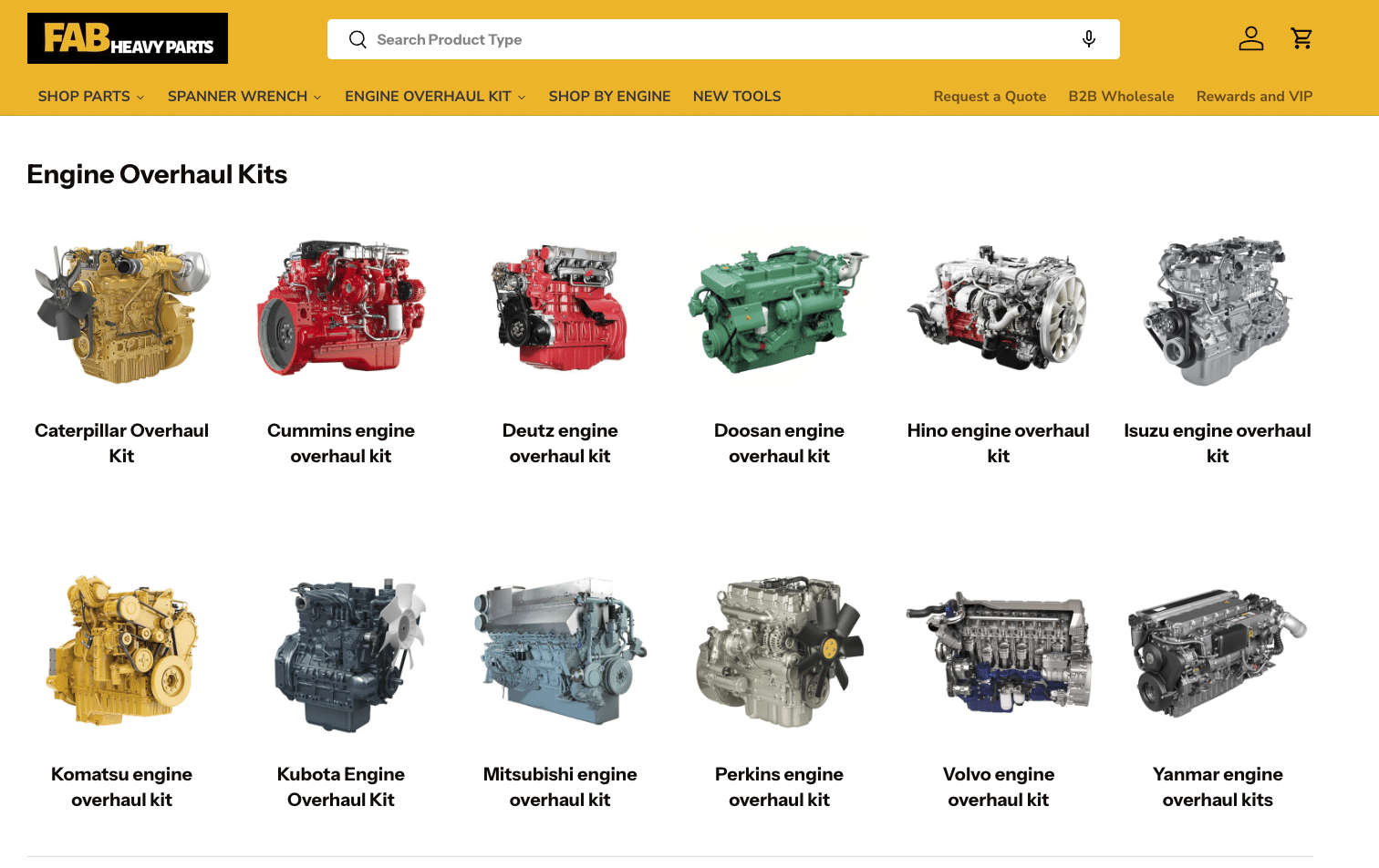
This is not a decision to make casually. An overhaul can make sense when the machine is still valuable, the engine is a good candidate for rebuilding, and the owner expects more productive use from the equipment. It may not make sense if the machine has multiple major problems, the repair cost approaches replacement cost, or downtime would be too disruptive.
A practical way to think about it is this:
If the machine is still useful but the engine is worn, a rebuild may protect the value of the equipment.
If the machine itself is no longer dependable or suitable for the work, engine work may not solve the bigger problem.
That distinction matters. Owners are not just repairing an engine. They are deciding whether the machine still belongs in the operation.
Using Aftermarket Heavy Equipment Parts Resources Without Guesswork
Major engine work depends on accuracy. A wrong component can delay a repair, increase labor time, and create more frustration when the machine is already down.
This is where records become valuable. Engine families can vary by model, serial number, production year, configuration, application, and prior repair history. Two components may look similar in a photo but still differ in ways that matter once the engine is opened up.
For equipment owners comparing supplier catalogs, resources such as fabheavyparts.com – aftermarket heavy equipment parts can be useful only when paired with accurate machine details, service records, and part-number information.
Before sourcing parts for major engine work, owners and repair teams should gather:
- machine make and model
- engine model
- serial number
- existing part numbers
- photos of removed components
- service history
- previous repair records
- measurements when needed
- application details
- notes from the diagnosing mechanic
The goal is not just to find a part. It is to find the right part quickly enough to keep the repair moving.
That matters because downtime has a way of adding pressure. A machine may already be in pieces. A crew may be waiting. A customer may be calling. In that moment, accurate information is not paperwork. It is part of the repair strategy.
The Smarter Question Is Not Always “Can It Be Fixed?”
Many engines can be fixed. The harder question is whether fixing them is the right decision.
A machine may be repairable but no longer worth the investment. Another machine may be older but still too useful to give up. One owner may need the equipment back quickly, while another may have time to rebuild. One business may value reliability above all else, while another may prioritize lower short-term cost.
The best decision comes from looking beyond the immediate failure.
Owners should ask:
- What will this machine be expected to do after the repair?
- How much work does it realistically have left?
- Are other systems likely to fail soon?
- Will the repair improve reliability or just delay another major problem?
- Is replacement actually better, or just more expensive?
- Can the business handle the downtime?
These questions do not always produce an easy answer, but they prevent one common mistake: spending money only because a machine is familiar, or replacing equipment only because a repair feels intimidating.
Good decisions usually sit somewhere between emotion and math.
The Takeaway
Major engine work is one of the toughest decisions in equipment ownership because it sits between repair and replacement. It forces owners to think about the past, present, and future of a machine all at once.
The past tells the story of how the machine has been used and maintained. The present shows the symptoms, diagnosis, downtime, and repair cost. The future asks whether the machine still has enough value to justify the work.
Sometimes the right answer is to rebuild. Sometimes it is to replace. Sometimes it is to do a smaller repair and watch the machine closely.
The key is not to decide in panic. A smart decision starts with symptoms, diagnosis, service records, fitment information, and a clear understanding of what the machine still means to the operation.
When an engine problem becomes serious, the best owners slow down long enough to ask the right questions: What failed? Why did it fail? What else is affected? How long will the machine be down? And after the work is done, will this machine still earn its place?