

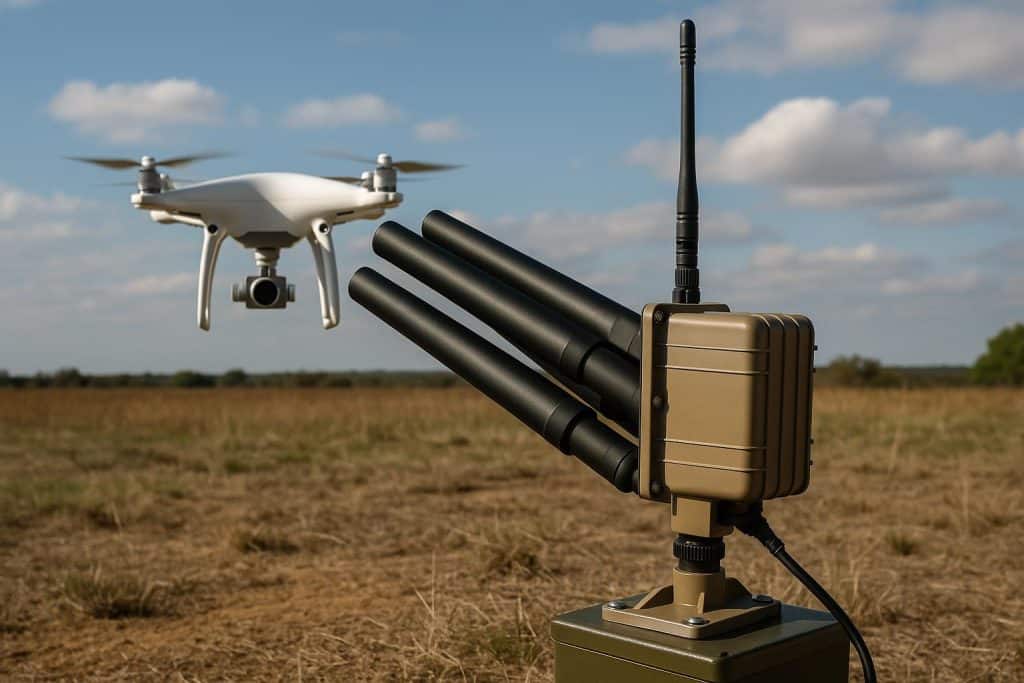
Small drones have quietly reshaped modern conflict. What once required expensive air support can now be replicated with commercial quadcopters modified for surveillance, payload delivery, or electronic disruption. That shift has created a fast-expanding market for counter-drone systems, especially technologies designed to interrupt control signals before a drone reaches its target.
As militaries and security agencies adjust to this reality, electronic warfare tools are moving from specialist units into standard field equipment. Among the most discussed solutions are compact systems designed to neutralize drones by disrupting their communication links in real time.
Why drone jamming is gaining traction
Drone threats are no longer limited to high-end military platforms. Off-the-shelf systems can now be weaponized with minimal technical expertise, making detection and disruption a priority for defense planners. In this context, using a drone jammer has become a practical response: instead of tracking a drone’s movement, these systems aim to sever its connection to its operator.
The appeal is straightforward. Jamming technologies can reduce reliance on kinetic interception systems and provide soldiers with a faster reaction window when a drone is already in flight. This is particularly relevant in environments where visibility is limited or where drones operate in coordinated swarms.
From niche capability to battlefield standard
What was once a specialized electronic warfare capability is increasingly being integrated at the tactical level. Portable systems are now being designed for frontline use, allowing infantry units to respond to drone incursions without waiting for centralized support.
MyDefence, a Danish defense technology company, has been part of this shift with its Pitbull system, which is positioned as a compact and ruggedized solution for field deployment. The MyDefence approach reflects a broader industry trend: making electronic warfare capabilities more mobile, responsive, and accessible at the soldier level.
The expanding defense market behind counter-drone systems
The global counter-UAS market has accelerated rapidly in recent years, driven by real-world conflicts and the increasing use of small unmanned systems in both surveillance and offensive roles. The U.S. Government Accountability Office notes that counter-drone technologies increasingly include systems capable of detecting, tracking, and when necessary, jamming or disabling unmanned aircraft as part of layered defense strategies.
This institutional focus has helped push drone jamming technologies into procurement pipelines, particularly for units operating in asymmetric warfare environments where small UAVs are widely used.
Electronic warfare is becoming more distributed
The rise of drone jammers also reflects a broader doctrinal shift in how electronic warfare is deployed. Instead of relying on centralized systems, modern militaries are increasingly distributing electronic countermeasures across units, allowing for faster decision-making in dynamic combat zones.
This decentralization is changing procurement priorities. Systems must now be lightweight, interoperable, and simple enough to be used under pressure. As a result, demand is growing not only for detection tools but also for disruption systems that can operate in real time without a complex setup.
In this evolving landscape, solutions like MyDefence’s Pitbull highlight where the market is heading: toward integrated, soldier-carried electronic warfare tools designed for a battlefield where drones are no longer an exception, but a constant presence.