

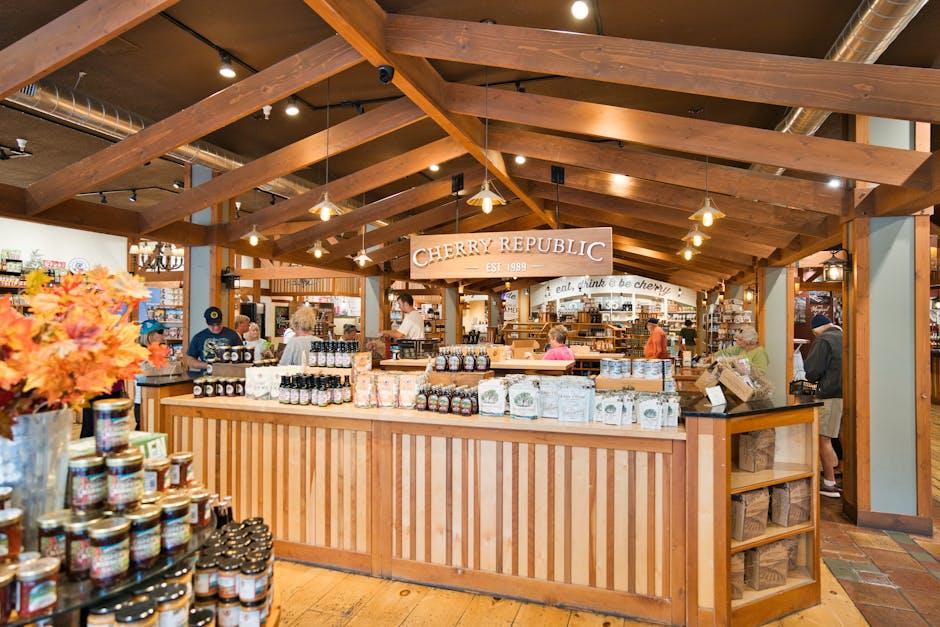
Defining the Specialty Retail Landscape in 2026
In an age of endless online choices and vast general merchandise stores, a different kind of shopping experience is thriving: Specialty Retail. These businesses offer more than just products. They provide curated selections, deep expertise, and highly personalized service. This unique approach builds strong customer relationships and ensures customer loyalty.
This guide explores the defining characteristics of Specialty Retail. It examines how these businesses differentiate themselves from mass-market competitors. Readers will learn about the latest market trends and challenges facing this sector. We will also look at how technology, like AI and agentic commerce, is shaping its future. From custom-designed clothing to unique home decor, Specialty Retailers often work with specialized materials. Examples include high-quality fabrics and specialty fleece textiles. These materials help them create their distinct offerings. This article will show why expertise and customization are more vital than ever for success.
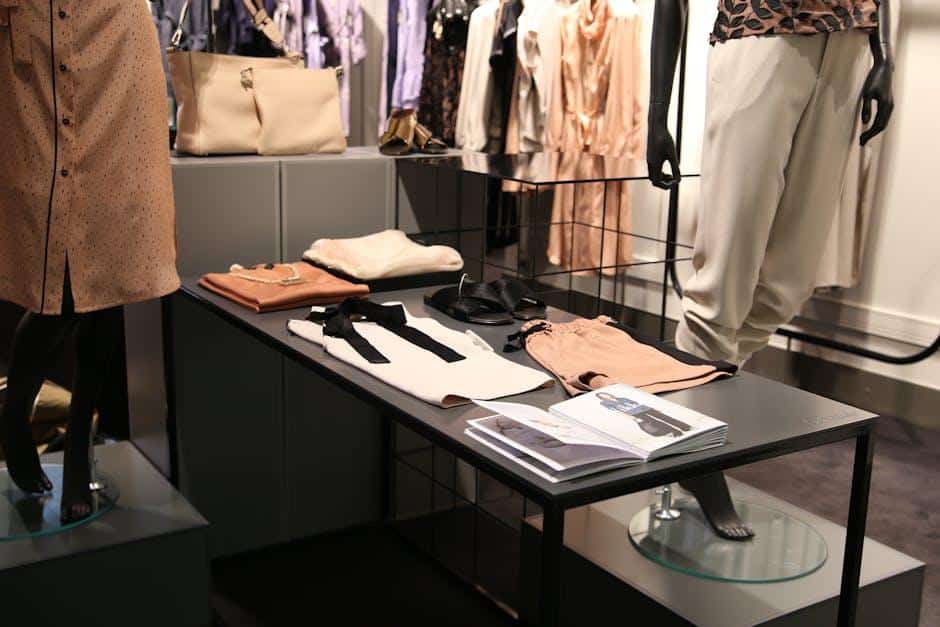
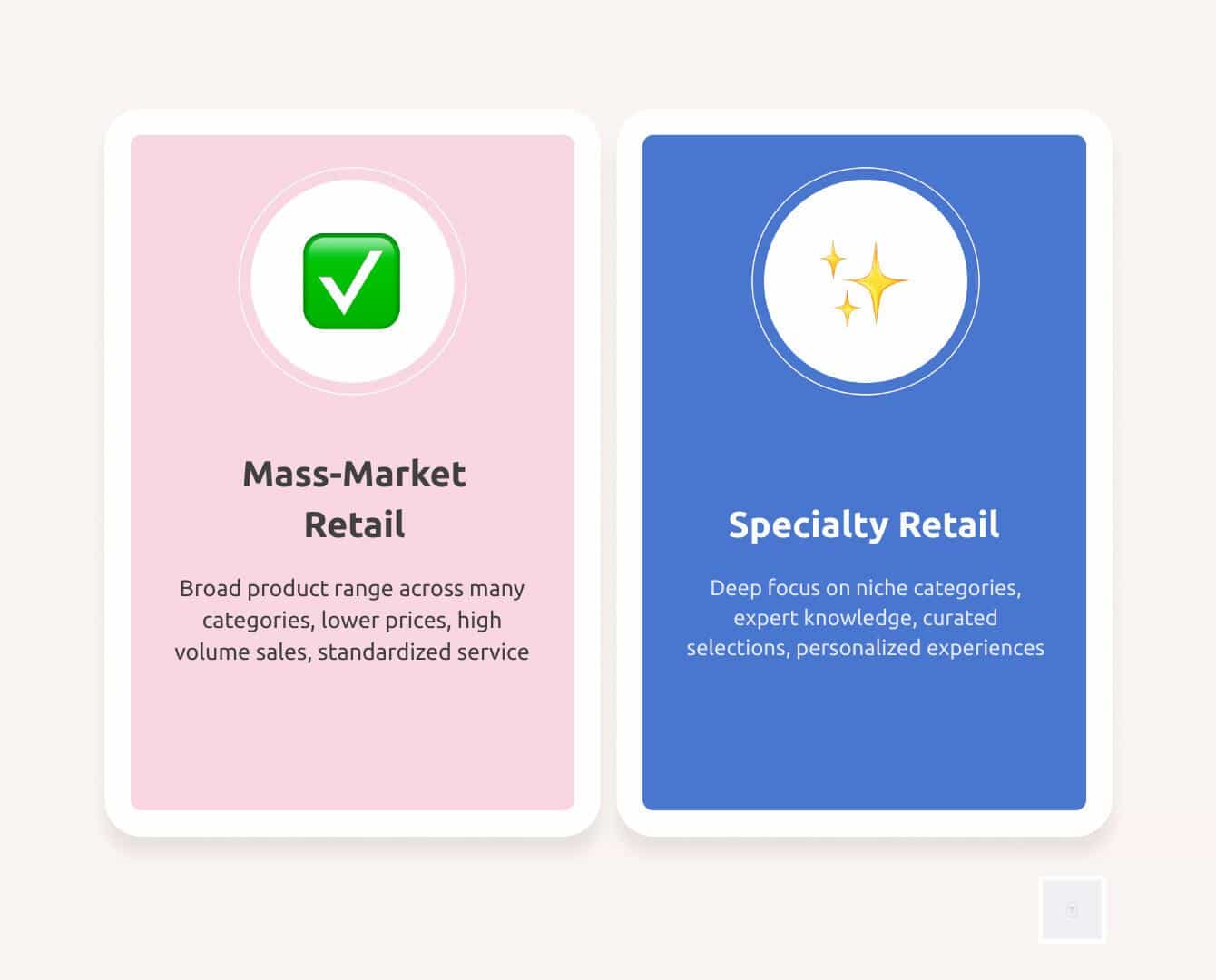
Specialty retail is a distinct segment within the broader retail industry, characterized by a focused approach to product categories and customer engagement. Unlike general or mass-market retailers that offer a wide array of goods across numerous categories, specialty retailers hone in on a specific niche, providing depth, expertise, and a highly curated selection. This focus allows them to cater to precise consumer needs and preferences, fostering a unique shopping experience.
To better understand this distinction, consider the following comparison:
Feature Specialty Retail Mass-Market Retail (e.g., Department Stores, Superstores) Product Range Deep assortment within one or a few specific categories Broad assortment across many unrelated categories Expertise High-level, specialized product knowledge General product knowledge, less specialized Customer Focus Personalized, relationship-driven Transactional, volume-driven Pricing Often premium, reflecting quality and service Competitive, often focused on low prices Store Layout Curated, immersive, experiential Functional, efficient, wide selection Value Prop. Unique selection, expert advice, tailored solutions. Convenience, one-stop shop, broad availability. Specialty retail stores are businesses that focus on a specific product category or niche market, offering expertise and a curated selection that general retailers cannot match. They might carry many Stock Keeping Units (SKUs), but all within one or two distinct categories, ensuring comprehensive niche selection. This fundamental difference is crucial for understanding the sector’s unique value proposition. More insights into this definition can be found in resources discussing What Does Specialty Retail Mean?
The financial landscape for specialty retail in 2026 is robust and growing. The American specialty retail industry is projected to reach USD 442,725.74 billion by 2031, signaling significant market confidence and expansion potential. Currently, the industry boasts a market capitalization of 186.666B, representing a 2.38% industry weight with 51 companies employing 594,287 individuals. This financial strength underscores the sector’s importance and its ability to attract substantial investment. Further details on the industry’s financial standing can be explored through various financial data platforms, including those covering Specialty Retail | SPG.
Key Characteristics of Specialty Retail Stores
Specialty retail stores distinguish themselves through several core characteristics that collectively create their unique appeal:
- Expert Knowledge: Staff members are often passionate and highly knowledgeable about the products they sell. This deep expertise allows them to offer informed recommendations, answer complex questions, and provide valuable insights that enhance the customer’s purchasing decision.
- High-Quality Products: These retailers typically focus on offering products known for their quality, craftsmanship, or unique attributes. The emphasis is on value and longevity rather than sheer volume or lowest price.
- Personalized Experience: From tailored recommendations to custom services, specialty retailers prioritize individual customer needs. They strive to build relationships, remember preferences, and create a welcoming, intimate shopping environment.
- Focused Product Range: While they may offer a wide variety of items, these are all contained within a narrowly defined category. This focus ensures a comprehensive selection for the niche, making the store a go-to destination for specific needs.
- Niche Categories: Specialty stores thrive by serving specific interests or demographics that larger retailers might overlook. This could range from specific hobbies to unique lifestyle segments.
- Brand Storytelling: Many specialty retailers excel at communicating the story behind their products, brands, or the values they embody. This narrative adds depth to the shopping experience and connects customers on an emotional level.
Real-World Success Across Diverse Niches
The success of specialty retail is evident across a multitude of niches, each leveraging its unique characteristics to thrive.
In luxury fashion, retailers like The Webster curate high-end apparel, beauty, and lifestyle products, offering a sophisticated shopping experience tailored to discerning customers. Their focus on Curated Luxury Fashion, Beauty & Lifestyle | The Webster allows them to present collections that reflect specific aesthetic and quality standards. Similarly, businesses like GARYS in Newport Beach specialize in men’s luxury apparel, shoes, and accessories, providing custom clothing services and exclusive brands to a clientele seeking premium quality and personalized style.
Artisanal food is another vibrant specialty sector. Di Bruno Bros. in Philadelphia, for instance, has built a reputation as a culinary pioneer, offering specialty cheeses, charcuterie, and gourmet foods that celebrate heritage and quality. Their ability to deliver Philadelphia’s Finest: Di Bruno Bros. Specialty Foods to doorsteps nationwide showcases how niche food retailers can blend local charm with broad reach.
Beyond these, outdoor gear stores provide expert advice and specialized equipment for activities like hiking, fishing, and camping, catering to enthusiasts who require specific, high-performance products. Bookstores maintain their relevance by offering curated selections, author events, and staff recommendations that create a community hub for readers. Jewelry boutiques provide personalized guidance for significant purchases, offering expertise on materials, designs, and ethical sourcing. Even in bustling urban centers, specialized multi-brand stores set the standard for curated retail, as highlighted by a Los Angeles feature on the 13 multi-brand stores that do so. These examples illustrate the power of focus, expertise, and personalized service in building successful, enduring retail businesses.
The Strategic Importance of Niche Expertise and Sensory Experience
In an increasingly commoditized market, specialty retailers carve out their indispensable role by offering what mass-market and online giants often cannot: unparalleled niche expertise and a rich, sensory-driven experience. This strategic importance lies in their ability to transcend mere transactions, building deep connections with consumers through immersive environments and highly personalized service.

The physical store environment becomes a crucial asset. Specialty retailers leverage sensory richness—think the aroma of freshly ground coffee in a gourmet food store, the tactile experience of fine fabrics, or the careful lighting in a jewelry boutique—to create a memorable atmosphere. This is coupled with immersive environments that transport shoppers, with less focus on buying and more on discovery and engagement. For example, a sporting goods retailer might feature interactive spaces with rock climbing walls or golf simulators, allowing customers to test products and receive expert advice in a relevant setting. This focus on in-store service reinforces brand loyalty, turning casual shoppers into dedicated patrons. Such curated experiences are a hallmark of leading specialty shops, influencing customer choices even in diverse shopping destinations.
Beyond the physical space, specialty retailers foster community engagement through workshops, events, and personalized consultations. These activities transform stores into social hubs where like-minded individuals can gather, learn, and connect. A boutique like Flora and Henri, for instance, hosts seasonal celebrations and fragrance launches, creating a sense of belonging and exclusivity for its clientele. This approach not only drives foot traffic but also strengthens the emotional bond between the customer and the brand.
Building Loyalty Through Expert Staff and Custom Goods
The cornerstone of specialty retail’s ability to build lasting customer loyalty is its investment in expert staff knowledge and the provision of custom goods and services. Unlike the often transient workforce of general retailers, specialty stores prioritize hiring individuals who possess deep passion and understanding of their specific product category. This translates into thorough staff training, equipping employees to provide nuanced advice and tailored recommendations. When a customer seeks advice on specific materials for a crafting project, for example, access to a resource like an article detailing Fabric for Blankets: Top Retailers and Types for Your Next Project can be invaluable, and a knowledgeable staff member can guide them to such resources or directly assist them.
This expertise extends to offering artisanal quality products and bespoke services. Many specialty retailers excel in providing custom solutions, whether it’s made-to-measure apparel, personalized gifts, or unique home furnishings. Companies like Calico offer free design services and custom manufacturing for fabrics and home decor, helping customers realize their specific vision. This level of customization and attention to detail creates products that are not just purchased, but deeply valued. These personalized offerings are a key differentiator, fostering stronger customer relationships built on trust and satisfaction. The ability to provide something truly unique, crafted to individual specifications, is a powerful driver of repeat business and positive word of mouth.
The Role of Personalization in Modern Consumerism
Personalization has evolved from a mere marketing tactic into a fundamental expectation for today’s consumers. Research indicates that about 80% of consumers worldwide are comfortable with personalized experiences and actively seek companies that understand and cater to their individual preferences. Specialty retailers are uniquely positioned to excel in this arena, leveraging their focused approach to deliver highly relevant and meaningful interactions.
This personalization is often powered by sophisticated data analytics, allowing retailers to track purchase history, browsing behavior, and stated preferences. This data informs everything from product recommendations to marketing communications. Membership programs and loyalty schemes are vital tools in this strategy, rewarding repeat customers and providing valuable insights into their habits. For instance, a specialty food retailer like Di Bruno Bros. offers monthly clubs (e.g., Cheese Pairing 101, Pasta Club) that deliver curated selections directly to subscribers, demonstrating a deep understanding of their customers’ culinary interests.
Event-based marketing further enhances personalization by creating exclusive experiences. Boutiques like Flora and Henri host intimate events such as spring celebrations or fragrance launches, offering customers unique opportunities to engage with products and brand founders. These events, alongside curated gift boxes and subscription models, transform shopping into an ongoing, personalized journey of discovery. By consistently delivering experiences that feel tailor-made, specialty retailers reinforce their value proposition, ensuring that customers feel seen, understood, and genuinely appreciated.
Navigating Market Performance and Competitive Challenges
Despite their unique strengths, specialty retailers operate in a dynamic, often challenging market landscape. They must constantly adapt to evolving consumer behaviors and intense competition from larger retail entities. However, recent performance indicators suggest that specialty retail is not only holding its own but also, in many respects, outperforming the broader market.
As of April 2026, the Specialty Retail Industry has posted an impressive Year-to-Date (YTD) return of 35.61%. This significantly outpaces the S&P 500’s YTD return of 18.45%, highlighting the sector’s resilience and growth potential. This strong financial performance can be attributed to several factors, including targeted consumer demand, effective adaptation strategies, and the intrinsic value of niche expertise. Investors looking for detailed performance metrics and company breakdowns can find comprehensive data on the Top Largest Companies In The Specialty Retail Industry List | Screener.
However, specialty retailers face formidable challenges. The most prominent among these is direct competition from big-box stores and online giants. These larger players often benefit from economies of scale, allowing them to offer lower prices and broader inventory, which can pressure smaller, specialized businesses. The rise of e-commerce has also intensified this competition, making convenience and delivery speed critical factors for consumers. This environment has, unfortunately, led to store closures and bankruptcies among some specialty retailers, who struggle to maintain their relevance in the face of such powerful competitors.
Overcoming the Dominance of Online Marketplaces
The proliferation of online marketplaces has fundamentally reshaped the retail landscape, accounting for roughly two-thirds of global e-commerce sales, a significant increase from approximately 40% in 2014. This dominance presents a unique challenge for specialty retailers, who must find ways to stand out amidst a seemingly infinite catalog of products.
To overcome this, specialty retailers must emphasize their unique value proposition. This often revolves around trust-based selling and expert-led discovery. For instance, in sectors dealing with high-value, emotionally significant purchases, such as Specialty diamond retail, the expertise and personalized guidance offered by a dedicated retailer are irreplaceable. Consumers are more likely to trust a specialist who can educate them, assure quality, and provide bespoke services, rather than relying solely on product descriptions on a vast marketplace.
Specialty retailers also differentiate themselves through high-touch service that online platforms struggle to replicate. This includes in-depth consultations, custom fittings, and post-purchase support that builds lasting relationships. By focusing on these strengths, specialty stores can cultivate a loyal customer base that values expertise and personalized care over sheer convenience or the lowest price point. The enduring appeal of well-known specialty stores, as reflected in surveys such as “The most famous specialty retail stores in America 2026” from YouGov, underscores the power of a distinct identity and a trusted brand in a crowded market.
Operational Excellence and Supply Chain Optimization
For specialty retailers, operational excellence is not just about efficiency; it’s about safeguarding the unique value they offer. Effective inventory management is paramount, ensuring that curated selections are always available without excessive stock. This requires precise forecasting and agile ordering systems tailored to niche demand.
Fast fulfillment has become a consumer expectation, driven by the speed of online giants. Specialty retailers are adapting by redesigning their supply chains to support rapid delivery. This includes establishing localized hubs for quicker distribution and implementing predictive replenishment technologies that anticipate demand. A home improvement retailer, for example, might leverage data to ensure that popular tools and materials are always in stock at local branches, ready for immediate pickup or same-day delivery.
To achieve this, specialty retailers rely on a suite of essential operational tools:
- Point-of-Sale (POS) systems: Modern POS systems do more than process transactions; they integrate inventory, customer data, and sales analytics to provide a holistic view of operations.
- Surveillance and Loss Prevention: Advanced security systems, including video surveillance and Electronic Article Surveillance (EAS) tags, are crucial for protecting valuable, specialized inventory.
- Retail Fixtures: Thoughtfully designed displays, shelving, and showcases are vital for presenting products attractively and creating an inviting shopping environment. This includes everything from gondola shelving to specialized apparel racks.
These tools, combined with optimized processes, allow specialty retailers to maintain high service standards, manage costs, and compete effectively in a market.
Technological Innovations: AI and Agentic Commerce
The rapid evolution of technology, particularly in Artificial Intelligence (AI) and Generative AI (GenAI), is profoundly impacting the specialty retail sector. These innovations are not just tools for efficiency; they are fundamentally reshaping how consumers discover products and interact with brands.
The adoption of GenAI among consumers is accelerating. As of February 2025, 22% of GenAI adopters had used these tools to research brands and products. Looking ahead, an impressive 48% of consumers plan to use GenAI for their holiday shopping journeys in November 2025. This indicates a significant shift in how purchasing decisions are being made, moving beyond traditional search engines to AI-powered discovery.
This trend ushers in the era of agentic commerce, where AI agents fundamentally alter the product discovery and purchase process. Consumers might interact with AI agents to find specific products, compare options, and even make purchases on their behalf. For specialty retailers, this means optimizing their content not just for traditional search engines, but for “answer engines” – the underlying Large Language Models (LLMs) that power these AI agents. Retailers must ensure their product information is comprehensive, accurate, and easily digestible by AI to appear in agent-led recommendations. The evolving nature of shopping, from local boutiques to digital platforms, is a continuous journey of discovery, as highlighted in the Ultimate Guide to Shopping in California.
GenAI is also revolutionizing marketing by enabling hyperpersonalization and more efficient content creation. Retailers can use AI to generate tailored marketing messages, product descriptions, and even visual content at scale. This allows for highly individualized customer experiences, addressing the consumer demand for personalization. Furthermore, AI-driven insights can enhance influencer storytelling, helping brands connect with the right voices to promote their unique offerings authentically.
Future Trends in Specialty Retail Operations
Looking ahead, specialty retailers must prepare for several key trends to remain competitive and innovative:
- AI Agents and Proprietary Marketplaces: Beyond optimizing for third-party AI agents, some specialty retailers may develop their own AI agents to offer highly specialized assistance. Similarly, building proprietary marketplaces can help them expand their product range by hosting third-party sellers, attracting new customers, and leveraging data for monetization.
- Enhanced Fulfillment: The demand for speed will continue, pushing retailers towards same-day availability and highly efficient omnichannel integration. This involves sophisticated logistics, localized inventory, and potentially drone or autonomous vehicle delivery in urban areas.
- Omnichannel Integration: Seamless integration between online and offline channels will be crucial. This means customers can browse online, try in-store, purchase digitally, and return anywhere, all while receiving a consistent brand experience.
- Sustainable Sourcing: Growing consumer awareness about environmental and social impact will make sustainable sourcing a non-negotiable. Specialty retailers, with their focus on quality and curated goods, are well-positioned to lead in offering ethically and sustainably produced products.
These trends point towards a future where technology and thoughtful operational strategies converge to create highly responsive, personalized, and responsible retail experiences.
Adapting to the Gen Z In-Store Preference
While technology reshapes many aspects of retail, the enduring appeal of physical stores, particularly for Generation Z, presents a unique opportunity for specialty retailers. Despite being digital natives, Gen Z often prefers in-store shopping, driven by a desire to see and feel items before purchase and to engage in social shopping experiences.
Specialty retailers can capitalize on this by creating highly engaging, technology-enhanced environments. This includes integrating digital elements that complement the physical experience, such as augmented reality mirrors for trying on clothes or interactive displays that provide product information. The focus should be on creating tactile experiences that let customers truly interact with products, fostering a deeper connection than online browsing allows.
Furthermore, transforming stores into community hubs through workshops, events, and interactive zones can attract Gen Z. These spaces become destinations for entertainment, learning, and social interaction, rather than just points of sale. Examples include home improvement stores offering DIY workshops or sporting goods retailers providing interactive testing grounds for equipment. By emphasizing brand authenticity and offering unique, shareable experiences, specialty retailers can cultivate a loyal Gen Z following that values the tangible and social aspects of shopping.
Frequently Asked Questions about Specialty Retail
How does specialty retail differ from general or mass-market retail?
Specialty retail distinguishes itself by focusing on a narrow product category or niche market, offering a deep assortment within that specific area. Unlike general or mass-market retailers that sell a wide variety of unrelated goods, specialty stores provide expert knowledge, high-quality products, and highly personalized customer experiences. Their value proposition lies in curation, expertise, and a tailored shopping journey, rather than broad convenience or the lowest price.
Why is specialty retail outperforming the broader market in 2026?
In 2026, specialty retail is outperforming the broader market due to its ability to meet specific consumer demands for curated products, expert advice, and personalized experiences. While mass-market retailers compete on price and convenience, specialty retailers thrive by offering unique value, fostering strong customer loyalty, and adapting quickly to niche trends. Their focused approach enables efficient inventory management and a deeper connection with their customer base, leading to higher customer satisfaction and repeat business.
What strategies can specialty retailers use to compete with online giants?
To compete with online giants, specialty retailers should leverage their inherent strengths: unparalleled in-store service, deep product expertise, and immersive sensory experiences. Key strategies include:
- Enhancing In-Store Experience: Creating unique, engaging physical spaces that offer more than just products, such as workshops, events, and interactive demonstrations.
- Personalized Customer Service: Utilizing expert staff to provide tailored recommendations and build strong, trust-based relationships.
- Omnichannel Integration: Seamlessly blending online and offline channels to offer convenience (e.g., buy online, pick up in-store) while maintaining brand consistency.
- Adopting Technology: Implementing AI and GenAI for hyperpersonalization in marketing, optimizing content for agentic commerce, and streamlining operations.
- Supply Chain Optimization: Focusing on fast fulfillment, localized inventory, and predictive analytics to meet delivery expectations.
- Curated Offerings: Continuing to provide unique, high-quality, and often custom-made products that are difficult to find elsewhere.
Conclusion
The enduring value of expertise in specialty retail and custom goods is undeniable in today’s complex market. As consumers navigate an overwhelming array of choices, the focused approach of specialty retailers offers a refreshing alternative defined by curated selections, deep product knowledge, and highly personalized experiences. This commitment to niche expertise, combined with rich sensory environments, fosters profound customer loyalty that mass-market and online giants struggle to replicate.
The industry’s strong financial performance in 2026, outperforming broader market indices, underscores its resilience and strategic importance. While challenges from online marketplaces and big-box stores persist, specialty retailers are actively embracing innovation. From leveraging AI for hyperpersonalization and optimizing for agentic commerce to redesigning supply chains for faster fulfillment, these businesses are strategically adapting. The continued preference of Generation Z for tactile, immersive in-store experiences further solidifies the role of physical specialty retail as a vital component of the modern shopping landscape.
Successful specialty retailers, whether in luxury apparel like GARYS Men’s Luxury Apparel, Shoes & Accessories in Newport Beach, CA, or artisanal foods, demonstrate that strategic innovation, coupled with an unwavering commitment to quality and customer relationships, paves the way for long-term growth. By continually refining their unique value proposition and embracing technological advancements, specialty retail is not just surviving but thriving, proving that in an age of abundance, true value lies in expertise and a human-centric approach.