

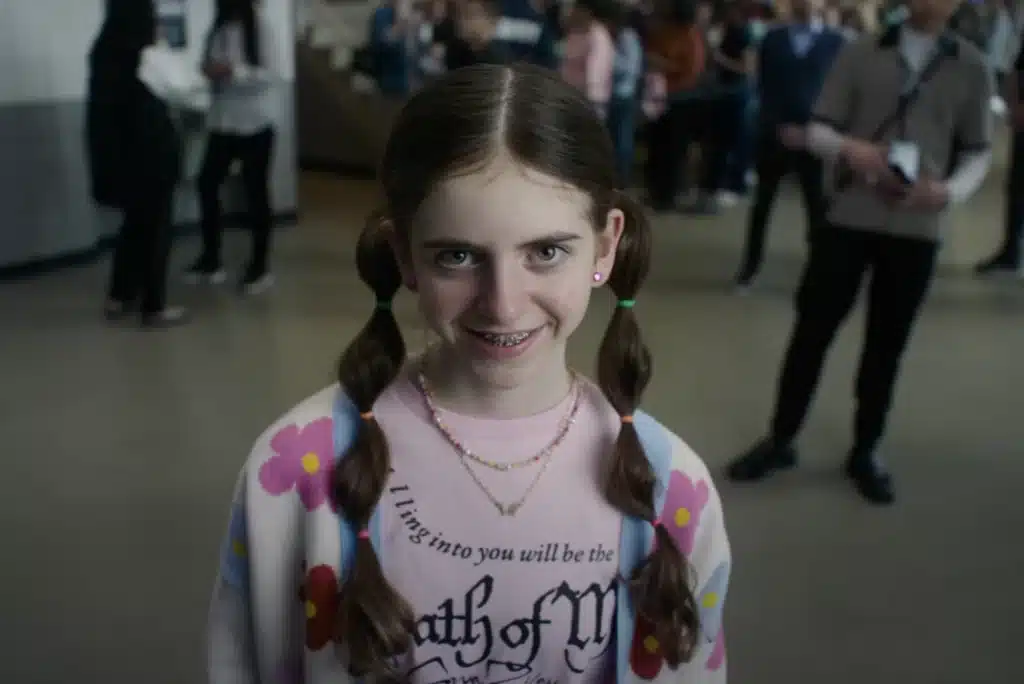
Imagine forgetting your lyrics in a sold-out arena, only to see one fan wearing a carved, unblinking grin. Checking early ratings, the consensus shows this sequel feels sharper by dropping a trauma-fed parasite into the music industry’s isolating pressure cooker. According to nearly every critic, surviving this contagious curse makes the dazzling Naomi Scott performance as Skye Riley the defining element of the cinematic experience (Smile 2).
Smile 2: Why Naomi Scott’s Portrayal of Skye Riley is the Sequel’s Real Secret Weapon
In the first film, we watched therapist Rose Cotter crumble under an unseen curse. Now, stepping up to lead the new cast of characters, pop star Skye Riley elevates that dread to a massive, arena-sized spectacle. For a global icon like Skye, the haunting acts as a chilling metaphor for celebrity isolation. The demonic parasite feeds on hidden pain, forcing her to maintain a perfect, smiling public mask while quietly suffocating under the spotlight’s heavy glare. She is surrounded by adoring millions, yet entirely alone.
Delivering this exhausting reality is exactly what makes Scott’s performance the sequel’s true anchor. Rather than just recycling modern psychological horror movie tropes, the film injects shocking Body Horror—a subgenre where terror stems from a terrifying loss of physical control. Scott visibly contorts and shatters on screen, making every frantic gasp feel like a fresh bruise. Capturing this visceral descent requires a specific visual claustrophobia manufactured directly behind the lens.
How Parker Finn’s Directorial Style Manufactures Pure Paranoia
Instead of relying on monsters hiding in shadows, Parker Finn’s directorial style makes you feel actively hunted. While the cinematography of modern horror sequels often prioritizes flashy gore, Finn weaponizes claustrophobia to trap you inside this psychological thriller. He wires your brain for panic using three specific techniques:
- Uncomfortably long close-ups: The camera stays tightly locked on faces, making you feel constantly watched.
- Amplified everyday sounds: Intrusive sound design turns normal noises—like a clicking pen—into intense physical discomfort.
- The ‘tension-release’ jump scare timing: An analysis of the scare frequency reveals a cruel rhythm, winding you up like a rubber band until the release valve finally snaps.
Surviving this sensory assault requires incredible stamina. By the time the full runtime concludes and the credits roll, your shoulders will likely ache from relentless tension. These cinematic choices force you to experience suffocating anxiety alongside the protagonist, ensuring that the exhausting paranoia pays off by the final act.
Smile 2: The Final Verdict: Is It Scarier and Better Than the Original?
If you have been debating the ticket price, the admission is definitely worth it for dedicated horror fans. When drawing a direct comparison to the first film, this sequel delivers significantly more visceral gore and intensity. If you are wondering whether the movie is scary enough for a Friday night theater trip, the answer is a resounding yes. Before hunting down an online guide explaining the complex ending, experience how brilliantly the finale handles exploring the curse’s dark mythology for yourself.