

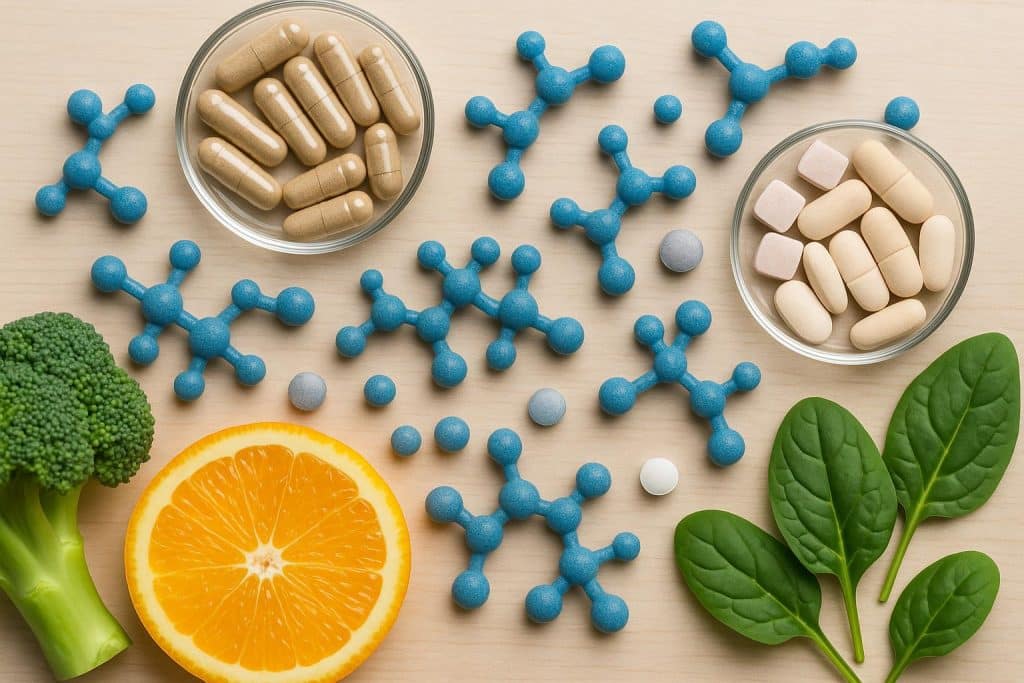
Efficient nutrition is not just about what you consume, but how much your body can actually absorb and use. Many people assume that eating enough minerals automatically guarantees optimal health, but absorption is often the limiting factor. This is why research interest has grown around highly purified peptides that enhance mineral absorption and micronutrient bioavailability, especially in functional nutrition and metabolic optimization.
Peptides play a unique role here because they can bind to minerals, protect them during digestion, and guide them through intestinal absorption pathways more efficiently than free mineral forms alone.
Why Mineral Absorption Is Often Inefficient
Minerals such as iron, zinc, magnesium, and calcium are essential for energy production, immune function, and cellular repair. However, their absorption is influenced by many factors including gut health, pH levels, competing nutrients, and dietary inhibitors like phytates.
Even in nutrient-rich diets, a significant portion of minerals may pass through the digestive system without being fully absorbed. This creates a gap between intake and actual biological availability.
This is where peptide-mineral interactions become important, as they can help stabilize and transport minerals through the digestive environment.
How Peptides Improve Micronutrient Bioavailability
Certain peptides can bind to mineral ions and form stable complexes that are more resistant to breakdown in the digestive tract. These peptide-mineral complexes are often absorbed more efficiently in the small intestine.
Instead of competing with other dietary components, the mineral is effectively “shielded” by the peptide until it reaches absorption sites.
This improves bioavailability, meaning a higher proportion of the nutrient becomes available for cellular use.
Amino Acid Derivatives and Mineral Transport
Amino acid derivatives also play a role in micronutrient transport. Some minerals naturally bind to amino acids or small peptide fragments, which helps facilitate their movement across intestinal membranes.
This mechanism is particularly important for minerals like iron and zinc, which require specialized transport systems in the gut.
By leveraging these natural pathways, peptide-based systems can improve the efficiency of nutrient uptake without requiring higher doses.
Iron Absorption and Peptide Complexes
Iron is one of the most well-studied minerals in relation to peptide-assisted absorption. It is also one of the most difficult to absorb efficiently due to dietary inhibitors and its reactive nature in the gut.
Peptides can help stabilize iron and reduce its interaction with compounds that block absorption. This allows more consistent uptake and reduces variability in iron bioavailability.
Improved iron absorption directly supports oxygen transport, energy production, and cognitive function.
Zinc, Immune Function, and Peptide Binding
Zinc is essential for immune function, enzyme activity, and wound healing. However, its absorption can be limited by dietary competition and digestive conditions.
Peptide binding may improve zinc stability during digestion, allowing more efficient transport into the bloodstream.
Better zinc bioavailability supports immune resilience and cellular repair processes, especially under conditions of metabolic stress.
Calcium Transport and Structural Health
Calcium absorption is tightly regulated and influenced by vitamin D, gut health, and dietary composition.
Peptides may assist in calcium transport by forming complexes that improve solubility and uptake efficiency.
This is particularly relevant for bone health, muscle function, and nerve signaling, where calcium plays a structural and regulatory role.
Gut Environment and Absorption Efficiency
The digestive tract is not just a passive absorption system. It actively regulates which nutrients enter circulation.
Peptides can interact with gut transporters and influence how nutrients are absorbed at the intestinal lining.
A healthier gut environment generally improves peptide-mediated absorption efficiency, making gut integrity a key factor in micronutrient bioavailability.
Synergy Between Peptides and Nutrient Formulation
In functional nutrition, peptides are often used in combination with minerals to improve delivery systems.
Instead of increasing dosage, the goal is to improve how effectively the body uses what is already provided.
This approach aligns with precision nutrition strategies that prioritize efficiency over quantity.
Cellular Utilization After Absorption
Absorption is only the first step. Once minerals enter circulation, they must be delivered to cells and incorporated into metabolic processes.
Amino acid derivatives and peptide fragments can influence how efficiently nutrients are transported into cells and utilized in enzymatic reactions.
This improves the overall metabolic impact of micronutrients beyond just absorption rates.
Limitations and Scientific Considerations
While peptide-assisted mineral absorption is promising, it is still an evolving area of research. The effectiveness of different peptide-mineral complexes can vary depending on molecular structure, digestive conditions, and individual biology.
Not all peptides enhance absorption equally, and some interactions are still being studied in controlled environments rather than large-scale human trials.
Because of this, peptide-based nutrient delivery is considered a developing optimization strategy rather than a fully standardized solution.
Practical Role in Functional Nutrition
In practical applications, peptide-enhanced minerals are used to improve nutrient efficiency without increasing dietary load.
This is particularly useful in populations with increased nutrient demand, such as athletes, individuals under chronic stress, or those with absorption challenges.
For Biohacklabs, this aligns with a focus on highly purified peptides, proteins, and amino acid derivatives designed to support more efficient biological utilization of nutrients.
The Bigger Picture
Micronutrient status is not determined solely by intake, but by how effectively nutrients are absorbed, transported, and used at the cellular level.
Peptides offer a mechanism to improve this entire pathway by enhancing stability, transport efficiency, and cellular uptake.
As research advances, peptide-based nutrient delivery may become a key component of next-generation functional nutrition systems focused on bioavailability rather than dosage alone.
FAQ
1. What are peptide-enhanced minerals?
They are mineral compounds bound to peptides that help improve absorption and stability during digestion.
2. How do peptides improve nutrient absorption?
They form protective complexes with minerals, helping them survive digestion and reach absorption sites more efficiently.
3. Which minerals benefit most from peptide binding?
Iron, zinc, and calcium are among the most studied due to their importance and absorption challenges.
4. Is bioavailability more important than dosage?
Yes, because higher absorption efficiency often matters more than simply increasing intake.
5. Are peptide mineral supplements widely used?
They are increasingly used in functional nutrition and advanced supplement formulations, but research is still developing.