

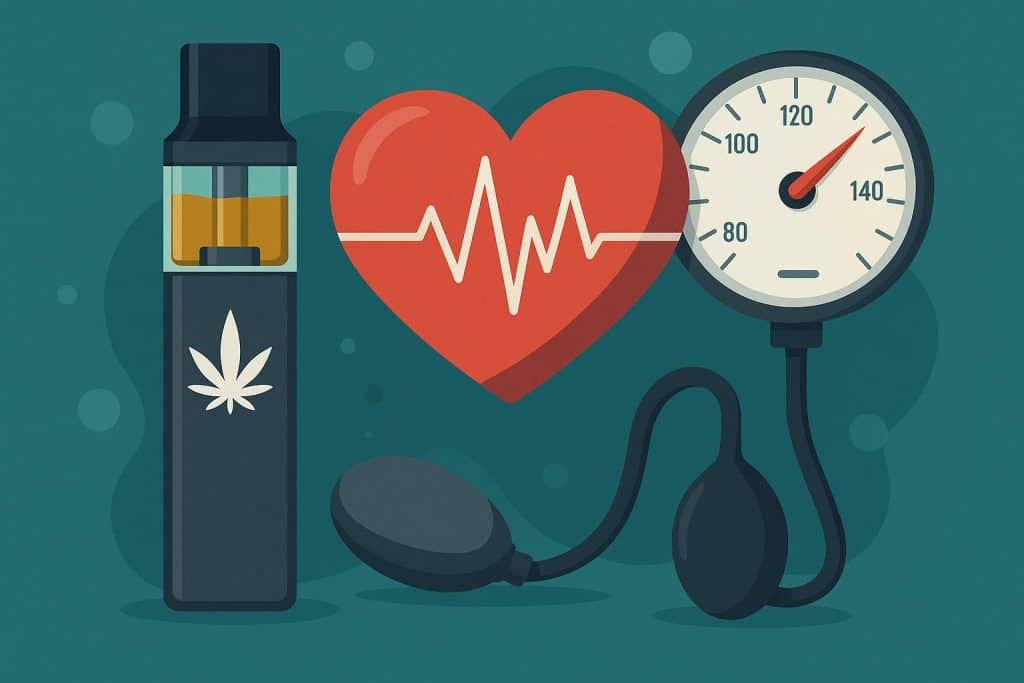
Cardiovascular responses are one of the most noticeable physical effects of THC, especially when inhaled through vaping. While experiences vary, many users report changes in heart rate and a temporary shift in blood pressure after consumption. This is why THC vape effects on heart rate and blood pressure are an important topic for anyone exploring cannabis products with an awareness of physical well-being.
Understanding these effects requires looking at how THC interacts with the endocannabinoid system and how that system influences cardiovascular regulation.
How THC Interacts With the Cardiovascular System
THC binds to cannabinoid receptors (CB1 and CB2) found throughout the body, including in the brain and vascular system. These receptors play a role in regulating heart rate, blood vessel tone, and autonomic nervous system activity.
When THC is inhaled, it enters the bloodstream quickly, leading to a rapid onset of effects compared to other consumption methods. This fast absorption is one reason cardiovascular responses can feel more immediate with vaping.
Why Heart Rate Increases After THC Use
One of the most commonly reported effects of THC is an increase in heart rate, also known as tachycardia. This happens because THC influences the sympathetic nervous system, which is responsible for “fight or flight” responses.
As this system becomes more active, the heart may beat faster to circulate blood more quickly. This response is usually temporary and tends to peak shortly after inhalation.
For most healthy individuals, this increase is short-lived, but sensitivity varies based on dosage, tolerance, and individual physiology.
THC and Blood Pressure Changes
THC can also affect blood pressure, but the pattern is more complex than a simple increase or decrease. In many cases, users experience a temporary drop in blood pressure when moving from sitting to standing, a phenomenon known as orthostatic hypotension.
This can occur because THC causes blood vessels to dilate, which can reduce vascular resistance and temporarily lower blood pressure.
As a result, some users may feel lightheaded or dizzy, especially with higher potency products.
Why Vaping Changes the Intensity of Effects
Vaping delivers THC rapidly into the bloodstream through the lungs, leading to a faster onset and more immediate cardiovascular response compared to edibles or other slower methods.
Because the absorption is quick, peak effects on heart rate and blood pressure may feel more pronounced in a shorter period of time.
This does not necessarily mean vaping is inherently more risky for everyone, but it does change the timing and intensity of physiological responses.
Dose Sensitivity and Individual Variation
The cardiovascular effects of THC are highly dose-dependent. Lower doses may produce mild or barely noticeable changes, while higher doses can lead to more significant heart rate elevation and blood pressure fluctuations.
Individual sensitivity also plays a major role. Factors such as body weight, tolerance, hydration, stress levels, and baseline cardiovascular health can all influence how strongly these effects are felt.
Because of this variability, two people using the same product may have very different experiences.
Anxiety, Perception, and Heart Rate
Psychological effects can also influence cardiovascular responses. THC can alter perception and sometimes increase awareness of bodily sensations.
For some users, this heightened awareness may lead to feelings of anxiety, which can further elevate heart rate through stress-related pathways.
This interaction between mind and body is one reason THC experiences can feel more intense in certain environments or mental states.
Short-Term vs Long-Term Considerations
In the short term, THC-induced changes in heart rate and blood pressure are typically transient. The body usually returns to baseline once the effects wear off.
However, frequent use of high-THC products may be more relevant for individuals with pre-existing cardiovascular concerns, which is why awareness of dosage and product potency is important.
Research in this area is still evolving, and long-term cardiovascular impacts of regular high-potency cannabis use are not fully understood.
Risk Factors to Be Aware Of
Certain individuals may be more sensitive to THC’s cardiovascular effects. This includes people with underlying heart conditions, blood pressure irregularities, or heightened anxiety responses.
In these cases, even moderate changes in heart rate or blood pressure may feel more pronounced.
Understanding personal limits and starting with lower potency products is often recommended for new users.
Product Potency and Its Role
Not all THC vape products are the same. Potency, terpene composition, and cannabinoid ratios can all influence how strongly cardiovascular effects are felt.
Higher THC concentrations generally increase the likelihood of noticeable heart rate elevation, while balanced formulations may produce a more moderate experience.
This is where product selection becomes important for managing overall experience.
The Bigger Picture
THC’s interaction with the cardiovascular system is part of its broader effect on the autonomic nervous system. These responses are typically temporary, but they can feel significant due to the speed of inhalation and the sensitivity of cardiovascular regulation.
Understanding these mechanisms helps users make more informed choices about potency, dosage, and consumption method.
For consumers exploring products from PacksDash, awareness of how different vape strengths influence physiological responses can support a more controlled and predictable experience.
FAQ
1. Does THC vape always increase heart rate?
Not always, but it commonly causes a temporary increase in heart rate, especially shortly after inhalation.
2. Can THC lower blood pressure?
Yes, it can cause temporary blood pressure drops in some users, particularly when standing up quickly.
3. Why does vaping THC feel stronger than other methods?
Vaping delivers THC rapidly into the bloodstream, leading to faster and more intense onset effects.
4. Is it dangerous for the heart?
For most healthy individuals, effects are temporary, but those with cardiovascular conditions should be cautious and consult a professional.
5. Why do I feel dizzy after vaping THC?
Dizziness can result from temporary blood pressure changes or rapid vasodilation caused by THC.